
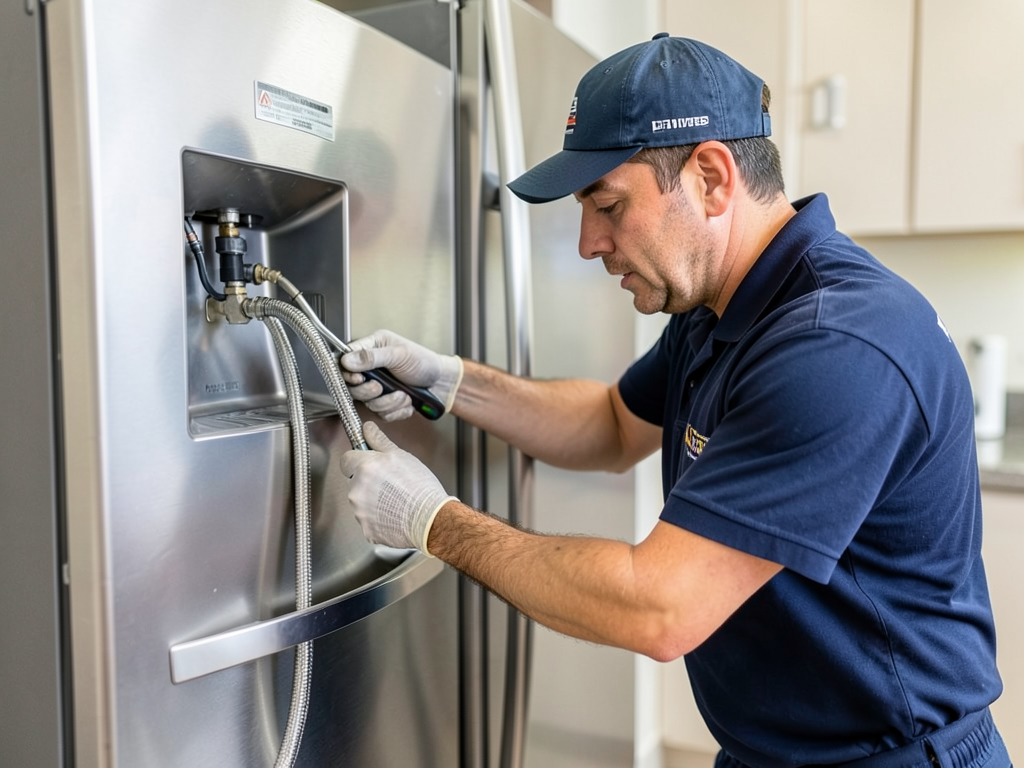
What to Do When Your Fridge Ice Maker Stops Working or Starts Leaking in Lyndon
Your fridge ice maker just stopped producing ice. Or worse, you found a puddle of water behind the refrigerator. These are common problems in Lyndon homes where older copper water lines can corrode or saddle valves fail. The first step is to stay calm and act quickly to prevent water damage to your kitchen floor and cabinets. The Cost of Tankless Water Heater Installation in Jeffersontown.
Start by locating the shut-off valve behind the fridge or under the sink. Turn it clockwise to stop water flow immediately. Then check for visible cracks or loose connections on the water line. If you see a small leak, you might be able to tighten the compression fitting with an adjustable wrench. But if the line is brittle, corroded, or the leak is significant, call a licensed plumber right away. Fixing Low Water Pressure in Your Crescent Hill Bungalow.
Ice maker leaks in Lyndon often happen because of hard water scale buildup in the solenoid valve or frozen supply lines during cold snaps. Louisville’s water supply, while high quality, contains minerals that accumulate over time and block small openings. This causes pressure to build until the line cracks or the valve fails.
Before you call for service, gather some basic information: the refrigerator brand and model, whether the leak is constant or only when the ice maker calls for water, and if you notice any unusual ice taste or odor. This helps the plumber diagnose the problem faster and bring the right parts.. Read more about Choosing the Right Garbage Disposal Horsepower for Your Busy Louisville Kitchen.
Common causes of ice maker failure in Lyndon include saddle valve failure, kinked plastic tubing, frozen water lines, and solenoid valve malfunction. Each has a different repair approach, and some require cutting into walls or replacing entire water line runs. A professional plumber can determine if a simple repair or a full line replacement is needed. EPA WaterSense.
Many Lyndon homes built before 2000 have copper water lines that corrode from the inside out. You might not see the damage until a pinhole leak sprays water across your floor. Modern replacements use braided stainless steel or PEX tubing, which resist corrosion and freezing better than old copper.
DIY repairs can seem tempting, but they often lead to bigger problems. Over-tightening compression fittings cracks the line. Using the wrong size tubing causes leaks. And saddle valves, while easy to install, are notorious for slow drips that cause mold growth behind the fridge.
Professional plumbers in Lyndon follow Kentucky State Plumbing Code requirements for ice maker installations. This includes using approved materials, proper shut-off valve types, and ensuring the line is protected from damage. Code compliance also matters for home insurance claims if water damage occurs.. Read more about Professional Pot Filler Installation for Your Rock Creek Kitchen.
Water pressure is another factor. Ice makers need 20-120 PSI to function properly. Too low and ice production stops. Too high and the line bursts. A plumber can test your home’s water pressure and install a regulator if needed to protect your appliances.
If you notice water damage around your fridge, check for signs of mold or mildew. Slow leaks create perfect conditions for mold growth inside cabinets and under flooring. This can become a health hazard and require professional remediation beyond just fixing the leak.
Emergency plumbing service in Lyndon is available 24/7 for ice maker water line problems. Most leaks can be repaired within an hour if the plumber has the right parts on the truck. Same-day service prevents extensive water damage and gets your ice maker working again quickly.. Read more about Essential Plumbing Considerations for Your Jeffersontown Basement Wet Bar Project.
Call (502) 370-2677 today to schedule your inspection before the next storm hits. A quick call now can save you thousands in water damage repairs later.
Common Signs Your Ice Maker Line Needs Repair
Ice makers give clear warning signs before complete failure. Recognizing these symptoms early can prevent water damage and expensive repairs. Here are the most common indicators that your ice maker water line needs professional attention. Why Your Prospect Home Needs a Whole House Water Filtration System.
Low ice production is often the first sign of trouble. If your ice maker suddenly produces half the usual amount or takes much longer to fill the bin, the water line might be partially blocked by sediment or ice. This blockage forces the solenoid valve to work harder, leading to premature failure.
Puddles behind the refrigerator are obvious signs of active leaks. But sometimes the leak is hidden. Check for water stains on the floor, warped baseboards, or soft spots in the flooring near the fridge. These indicate slow leaks that have been occurring for weeks or months.. Read more about The Hidden Risks of Attic Plumbing and How to Prevent Costly Ceiling Leaks.
Weird-tasting ice often means contamination in the water line. Mold, bacteria, or rust from corroded pipes can affect ice flavor and odor. If you notice a change in ice taste, the water line likely needs cleaning or replacement.
Ice maker not making ice at all could mean the water line is completely blocked or the solenoid valve has failed. Before assuming the worst, check that the shut-off valve is open and the fridge is getting power. If these basics check out, the problem is likely in the water supply system.
Water dispenser on the fridge door not working usually indicates a frozen or blocked supply line. This often happens when the fridge is too close to the wall, restricting airflow around the water line. Moving the fridge slightly can sometimes solve this problem.
Clicking sounds from behind the fridge when the ice maker calls for water suggest the solenoid valve is struggling. This could mean low water pressure, a failing valve, or a blockage in the line. Continuing to run a struggling valve will cause it to fail completely.
Ice cubes smaller than normal or hollow in the middle indicate water supply problems. The ice maker is getting some water but not enough to make full cubes. This points to a partially blocked line or low water pressure issues.
Ice maker overflowing or making giant clumps of ice suggests the shut-off mechanism isn’t working properly. This could be a mechanical failure in the ice maker itself or a water pressure problem causing the valve to stick open.
Visible corrosion on copper water lines behind the fridge is a serious warning sign. Green or blue deposits on the pipe indicate active corrosion that will eventually cause leaks. These lines should be replaced before they fail completely.
Warm spots on the floor near the refrigerator can indicate a hot water line has been connected to the ice maker. This is a common DIY mistake that wastes energy and can damage the ice maker. The line needs to be reconnected to the cold water supply.
Ice maker leaking water into the ice bin rather than making cubes suggests the fill tube is frozen or blocked. When water can’t enter the ice maker properly, it often backs up and leaks into areas where it shouldn’t be.
Strange noises from the ice maker motor or gear assembly indicate mechanical problems. While not directly related to the water line, these issues often occur simultaneously with water supply problems and may require complete ice maker replacement.
Ice maker working intermittently points to loose connections or failing components. The line might work when pressure is high but fail during peak usage times. This inconsistent behavior often precedes complete failure.
Water stains on the ceiling below the kitchen suggest a major leak that has been going on for some time. This requires immediate professional attention as the damage extends beyond just the ice maker system.
Ice maker making clicking sounds but no water comes out could mean the solenoid valve has failed electrically. This prevents water from entering the ice maker even when the valve opens mechanically.
Ice cubes sticking together in large clumps indicate temperature problems in the freezer or ice bin. While not always a water line issue, it can happen when the ice maker runs constantly trying to compensate for low water flow.
Ice maker producing very cloudy or milky ice suggests air in the water line or high mineral content. This affects ice quality and can indicate problems with your home’s water supply system that need addressing.
Ice maker leaking from the front of the fridge rather than the back suggests a different problem. This could be a clogged defrost drain or a problem with the ice dispenser mechanism rather than the water supply line.
Ice maker not cycling at all might mean it’s not receiving power or the control module has failed. Check that the ice maker arm is in the down position and that the fridge is getting power before assuming water line problems.
Ice maker making grinding or scraping noises indicates mechanical wear inside the ice maker assembly. These sounds often occur when the ice maker struggles to operate due to insufficient water supply.
Ice maker producing very small or incomplete cubes suggests the fill time is too short. This can happen when water pressure is low or the fill valve is partially blocked by sediment.
Ice maker leaking only during certain times of day points to pressure fluctuations in your home’s water system. This often happens in homes with well water or municipal systems that experience pressure changes throughout the day.
Ice maker working but producing very little ice suggests either low water pressure or a partially blocked line. The ice maker is functioning but can’t get enough water to make ice efficiently.
Ice maker making clicking sounds when you try to dispense ice but no ice comes out indicates a mechanical problem with the dispenser rather than the water supply. This requires different repairs than water line issues.
Ice maker leaking from multiple points suggests widespread corrosion or damage to the entire water line system. This often requires complete replacement rather than spot repairs.
Ice maker producing ice that melts very quickly might indicate temperature problems in the freezer rather than water supply issues. However, it can also happen when the ice maker runs constantly trying to compensate for insufficient water flow.
Ice maker making unusual clicking or buzzing sounds when the ice maker is off suggests electrical problems with the control module. This requires professional diagnosis as it’s not directly related to the water supply system.
Ice maker leaking only when the ice maker is making ice points to a problem with the fill valve or water inlet. The leak occurs when water flows but stops when the ice maker is idle.
Ice maker producing ice with strange colors or odors indicates contamination in the water supply. This could be from old pipes, mold growth, or problems with your home’s water filtration system.
Ice maker not making ice but water dispenser works fine suggests the problem is isolated to the ice maker system rather than the main water supply. This could be a frozen fill tube or a failed ice maker control module.
Ice maker making loud noises during the harvest cycle indicates mechanical wear in the ice maker assembly. While not directly related to water supply, these problems often occur together and may require complete ice maker replacement.
Ice maker leaking from the bottom of the fridge suggests a problem with the defrost drain system rather than the water supply line. This requires different repairs than typical ice maker water line issues.
Ice maker producing very clear ice suggests good water quality but doesn’t rule out supply problems. Clear ice can still form with low water pressure or partially blocked lines, just in smaller quantities.
Ice maker working but making very slow ice indicates either low water pressure or a partially blocked line. The system is functioning but can’t operate at full capacity due to supply restrictions.
Ice maker making clicking sounds when you press the dispenser lever but no water comes out suggests a problem with the dispenser switch or control board rather than the water supply system.
Ice maker leaking from the back of the fridge only when the ice maker is active points to a problem with the water inlet valve or supply connections. The leak occurs when water flows but stops when the system is idle.
Ice maker producing ice that’s too soft or doesn’t hold its shape suggests temperature problems in the freezer or issues with the ice maker’s thermostat. This isn’t directly related to water supply but can occur alongside water line problems.
Ice maker making grinding noises when the auger turns indicates mechanical wear in the ice dispenser system. While not a water line issue, these problems often occur simultaneously and may require multiple repairs.
Ice maker leaking from the ice bin suggests a problem with the ice maker’s shut-off mechanism or overflow protection. This could be a mechanical failure or a water pressure problem causing the valve to stick open.
Ice maker producing ice with white specks or cloudiness indicates air in the water line or high mineral content. While not always a supply problem, it can affect ice quality and suggest issues with your home’s water system.
Ice maker not making ice but the motor runs suggests a problem with the water inlet system rather than the ice maker mechanism itself. This could be a frozen fill tube, blocked line, or failed solenoid valve.
Ice maker making clicking sounds when you open the freezer door but no ice comes out indicates a problem with the ice maker’s optical sensor or control module rather than the water supply system.
Ice maker leaking from the bottom front of the fridge suggests a problem with the water dispenser system rather than the ice maker supply line. This requires different diagnostic approaches and repairs.
Ice maker producing ice that tastes like plastic suggests contamination from new water line installations or problems with the ice maker’s internal components. This often resolves itself over time but can indicate supply system issues.
Ice maker making loud banging noises when the water turns on suggests water hammer in your home’s plumbing system. This can damage water lines and requires professional attention to prevent further problems.
Ice maker leaking only during the night suggests pressure fluctuations in your home’s water system. This often happens in homes with well water or municipal systems that experience pressure changes throughout the day.
Ice maker producing ice that’s too hard or difficult to crush indicates temperature problems in the freezer rather than water supply issues. However, it can occur when the ice maker runs constantly trying to compensate for insufficient water flow.
Our Professional Repair Process
When you call for ice maker water line repair in Lyndon, our licensed plumbers follow a systematic process to diagnose and fix the problem correctly the first time. This approach ensures code compliance and prevents future leaks.
The inspection begins with a visual examination of the entire water line system from the shut-off valve to the ice maker inlet. We look for signs of corrosion, damage, or improper installations that could cause problems. This includes checking for saddle valves, which are common failure points in DIY installations.
Next, we test the water pressure at multiple points in the system. Ice makers require 20-120 PSI to function properly. Low pressure causes slow ice production, while high pressure can burst lines. We use a pressure gauge to measure and determine if a regulator is needed.
We then check the shut-off valve type and condition. Ball valves are preferred over saddle valves because they provide better control and are less likely to leak. If we find a saddle valve, we typically recommend replacement with a proper ball valve installation.
The water line material is examined next. Copper lines, common in older Lyndon homes, can corrode from the inside out. We look for green or blue deposits that indicate active corrosion. Modern replacements use braided stainless steel or PEX tubing, which resist corrosion and freezing better than copper.
We test the solenoid valve for proper operation. This valve opens when the ice maker calls for water and closes when the fill cycle completes. A failing solenoid can cause intermittent leaks or prevent ice production entirely. We check for electrical continuity and proper mechanical operation.
If the line is frozen, we use safe thawing methods to clear the blockage. This might involve using a hair dryer on low heat or applying warm towels to the affected area. We never use open flames or excessive heat that could damage the line or surrounding materials.
For damaged lines, we determine whether repair or replacement is more cost-effective. Small cracks in copper lines can sometimes be repaired with compression fittings, but corroded sections usually require complete replacement. We factor in the age of the line and the likelihood of future problems.
When replacing lines, we use materials that meet Kentucky State Plumbing Code requirements. This includes using approved tubing types, proper fittings, and ensuring the line is protected from damage. We also consider the specific conditions in your Lyndon home, such as exposure to freezing temperatures or high water pressure.
After repairs, we test the entire system under pressure to ensure there are no leaks. We check all connections, valves, and the ice maker itself for proper operation. This includes running a complete ice making cycle to verify that water flows correctly and the system shuts off properly.
We also check for secondary damage that might have occurred from the leak. This includes looking for water damage to flooring, cabinets, or walls, and checking for signs of mold growth. If we find damage, we can recommend appropriate remediation steps.
Finally, we provide maintenance recommendations to prevent future problems. This might include installing a water filter to reduce sediment buildup, adjusting water pressure, or scheduling regular inspections of the ice maker system.
Our repair process typically takes 1-2 hours for simple leaks and up to 4 hours for complete line replacements. We bring all necessary parts on our service trucks to complete most repairs in a single visit.
We guarantee our workmanship and use only quality materials that meet or exceed code requirements. Our repairs come with a warranty, giving you peace of mind that the problem is solved correctly.
Throughout the process, we keep you informed about what we’re finding and our recommended solutions. We explain the pros and cons of different repair options so you can make informed decisions about your home’s plumbing system.
Our plumbers are licensed, insured, and experienced with ice maker water line repairs in Lyndon homes. We understand the specific challenges of local water quality and building conditions that can affect these systems.
We also coordinate with other trades if needed. For example, if water damage has affected your flooring or cabinets, we can work with your restoration contractor to ensure the plumbing repairs integrate smoothly with the overall repair process.
After completing the repair, we clean up our work area and remove any debris or old materials. We treat your home with respect and leave it in better condition than we found it.
We provide you with documentation of the work performed, including any parts replaced and recommendations for future maintenance. This information can be valuable for insurance purposes or if you sell your home in the future.
Our goal is to restore your ice maker to full functionality while preventing future problems. We don’t just fix the immediate issue; we address the underlying causes to provide long-lasting solutions.
If you have any questions after the repair, we’re available to provide support and answer your concerns. Our commitment to customer satisfaction extends beyond the completion of the repair work.
DIY vs. Professional Plumbing: When to Call an Expert
Many homeowners wonder if they can fix a leaking ice maker water line themselves. While some simple issues can be handled with basic tools, there are important reasons to call a professional plumber for ice maker repairs in Lyndon. How to Handle a Main Sewer Line Backup in Your St. Matthews Home.
DIY repairs might seem cost-effective initially, but they often lead to bigger problems. Over-tightening compression fittings can crack the line. Using the wrong size tubing causes leaks. And saddle valves, while easy to install, are notorious for slow drips that cause mold growth behind the fridge.
Professional plumbers in Lyndon follow Kentucky State Plumbing Code requirements for ice maker installations. This includes using approved materials, proper shut-off valve types, and ensuring the line is protected from damage. Code compliance also matters for home insurance claims if water damage occurs.
Water pressure is another factor that DIYers often overlook. Ice makers need 20-120 PSI to function properly. Too low and ice production stops. Too high and the line bursts. A plumber can test your home’s water pressure and install a regulator if needed to protect your appliances.
Louisville’s water supply contains minerals that accumulate over time and block small openings in ice maker valves. This causes pressure to build until the line cracks or the valve fails. Professional plumbers understand these local water quality issues and can recommend appropriate filtration or treatment solutions.
Emergency situations require immediate professional attention. If you discover a significant leak or water damage, every minute counts. Professional plumbers have the tools, parts, and experience to stop the leak quickly and prevent further damage to your home.
Hidden damage is another reason to call an expert. Slow leaks behind the fridge can cause mold growth, wood rot, and damage to flooring and cabinets. Professionals know how to detect these problems early and recommend appropriate remediation steps.
Warranty considerations matter too. Many refrigerator manufacturers require professional installation and repair of water lines to maintain warranty coverage. DIY repairs might void your warranty and leave you responsible for future repairs.
Time is valuable. What might take a homeowner an entire weekend to diagnose and repair, a professional plumber can often complete in an hour or two. This includes having the right tools and parts on hand to complete the job efficiently.
Safety is a key consideration. Water and electricity don’t mix. If your fridge is plugged in during repairs, there’s risk of electric shock. Professionals know how to work safely around electrical appliances and water systems.
Long-term reliability is better with professional repairs. DIY fixes often fail again within months because the underlying problem wasn’t properly addressed. Professional repairs address root causes and use quality materials that last longer.
Insurance claims can be complicated by DIY repairs. If water damage occurs after a DIY repair, your insurance company might question whether the repair was done correctly. Professional repairs provide documentation that can support insurance claims.
Knowledge of local building conditions matters. Lyndon homes have specific challenges like freezing temperatures, high humidity, and varying water pressure that affect ice maker systems. Local plumbers understand these conditions and how to address them properly.
Access to proper tools is another advantage. Professional plumbers have specialized tools for testing water pressure, detecting leaks, and working with different types of tubing. These tools ensure accurate diagnosis and proper repairs.
Material quality makes a difference. Professionals use commercial-grade materials that resist corrosion and wear better than consumer-grade products. This means your repair will last longer and perform better over time.
Code compliance is essential for home value. If you sell your home, unpermitted plumbing work can cause problems during inspections. Professional repairs ensure your work meets local code requirements and won’t cause issues later.
Peace of mind is valuable. Knowing that your ice maker repair was done correctly by a licensed professional gives you confidence that you won’t face the same problem again soon.
Cost comparison often favors professionals when you consider the full picture. DIY repairs might save money upfront but can cost more in the long run due to failed repairs, water damage, and wasted time.
Complex problems require expertise. If your ice maker issue involves electrical components, control modules, or integration with other home systems, professional diagnosis is essential to identify and fix the real problem.
Preventive maintenance is part of professional service. Plumbers can identify potential problems before they become emergencies and recommend maintenance steps to extend the life of your ice maker system.
Emergency availability matters when problems occur at inconvenient times. Professional plumbing services offer 24/7 emergency response for situations that can’t wait until regular business hours.
Documentation and warranty protection come with professional service. You receive paperwork showing what was done, what materials were used, and what warranties apply. This documentation is valuable for future reference and home maintenance records.
Call (502) 370-2677 today to schedule your inspection. A quick call now can save you thousands in water damage repairs later.
Serving All Louisville Neighborhoods
Victory Plumbing provides expert ice maker water line repair services throughout the greater Louisville area. Our team understands the unique plumbing challenges in different neighborhoods and brings the right expertise to every job.
In St. Matthews, we frequently work on homes built in the 1950s and 1960s that often have aging copper water lines. These lines can corrode from the inside out, causing pinhole leaks that are difficult to detect until significant damage occurs. Our plumbers know how to identify these hidden problems and recommend appropriate replacement options.
The Highlands area features many historic homes with original plumbing systems. These properties often have galvanized steel pipes that rust internally, reducing water pressure and causing sediment buildup in ice maker lines. We specialize in upgrading these older systems while preserving the character of these beautiful homes.
Old Louisville residents often deal with Victorian-era homes that have unique plumbing configurations. Our team has experience working with the specific challenges these properties present, including accessing pipes in tight spaces and working around original architectural features.
In Jeffersontown, we see many newer homes with modern PEX plumbing systems. While these systems are generally reliable, they still require proper installation and maintenance. We provide expert service for these newer systems while understanding how they integrate with older neighborhood infrastructure.
Middletown homes often feature larger kitchens and multiple ice makers or water dispensers. Our team is equipped to handle complex installations and repairs for these high-end appliances, ensuring they work properly and efficiently.
Fern Creek residents benefit from our understanding of the area’s specific water quality issues. The water in this part of Jefferson County can have higher mineral content, which affects ice maker performance and longevity. We recommend appropriate filtration solutions to address these local conditions.
Okolona homes often have slab foundations where water lines run through concrete. This can make repairs more challenging but also more critical, as leaks can cause significant damage before they’re detected. Our plumbers use advanced leak detection technology to find problems quickly.
Pleasure Ridge Park residents appreciate our quick response times for emergency repairs. We understand that ice maker problems can’t always wait for regular business hours, so we offer 24/7 emergency service throughout the area.
Valley Station homes often have well water systems that can affect ice maker performance. We’re experienced in diagnosing and repairing problems related to well water quality, pressure fluctuations, and system integration with household appliances.
Shively residents benefit from our knowledge of the area’s specific building codes and permit requirements. We ensure all our work meets local regulations and help navigate any necessary permits for larger repair projects.
Lyndon, where this article focuses, has a mix of older and newer homes with varying plumbing systems. Our team is familiar with the specific challenges in this area, from freezing temperatures affecting outdoor lines to the impact of local water quality on ice maker performance.
Anchorage homeowners often have high-end appliances that require specialized knowledge for proper repair. We stay current with the latest ice maker technologies and repair techniques to serve these sophisticated systems effectively. Protecting Your Anchorage Basement with a Reliable Sump Pump System.
Crescent Hill’s historic bungalows and craftsman homes present unique challenges for ice maker installations. Our plumbers understand how to work within the constraints of these beautiful older homes while providing modern convenience and reliability.
Hikes Point residents appreciate our attention to detail and thorough approach to problem-solving. We don’t just fix the immediate issue; we look for underlying causes and recommend preventive measures to avoid future problems.
No matter which Louisville neighborhood you call home, Victory Plumbing brings the same commitment to quality, reliability, and customer satisfaction to every job. We understand that plumbing emergencies don’t respect neighborhood boundaries, which is why we offer comprehensive service throughout the entire metro area.
Our plumbers are licensed, insured, and experienced with the specific challenges of Louisville’s diverse housing stock. We bring the right tools, parts, and expertise to handle any ice maker water line problem, from simple repairs to complete system replacements.
We also understand the importance of timely service in emergency situations. That’s why we offer same-day service for most ice maker repairs and 24/7 emergency response for urgent situations that can’t wait.
Our commitment to the Louisville community goes beyond just fixing plumbing problems. We’re invested in the long-term well-being of our neighbors and work to provide solutions that enhance home value and quality of life.
Whether you live in a historic Victorian in Old Louisville or a modern home in East Louisville, Victory Plumbing has the expertise to handle your ice maker water line repair needs quickly and professionally.
Frequently Asked Questions
How much does it cost to repair an ice maker water line?
The cost varies depending on the problem’s complexity. Simple repairs like tightening a fitting might cost $75-150, while complete line replacements typically range from $200-400. Emergency service calls may have additional fees. We provide upfront pricing before starting any work.
How long does an ice maker water line repair take?
Most simple repairs can be completed in 1-2 hours. Complete line replacements typically take 2-4 hours depending on accessibility and the extent of the work needed. We bring all necessary parts on our service trucks to complete most repairs in a single visit.
Can I use my ice maker while waiting for repairs?
If there’s an active leak, you should turn off the water supply immediately to prevent damage. If the problem is just slow ice production or weird-tasting ice, you can continue using it but should schedule repairs soon to prevent complete failure.
What brands of refrigerators do you service?
We service all major refrigerator brands including Samsung, LG, Whirlpool, GE, Frigidaire, KitchenAid, Bosch, and more. Our plumbers are trained on the specific requirements of different brands and models.
Should I repair or replace my ice maker water line?
This depends on the line’s age, material, and condition. Copper lines over 15 years old with corrosion usually need replacement. PEX and braided stainless steel lines can often be repaired if the damage is isolated. We’ll assess your specific situation and recommend the most cost-effective solution.
Can a leaking ice maker water line cause mold?
Yes, slow leaks create perfect conditions for mold growth behind refrigerators and under flooring. Even small amounts of moisture over time can lead to significant mold problems that require professional remediation beyond just fixing the leak.
Do I need a permit for ice maker water line repairs?
Simple repairs typically don’t require permits. However, major replacements or changes to the plumbing system might need permits depending on local regulations. We handle all necessary permits and ensure our work meets code requirements.
What causes ice maker water lines to freeze?
Freezing usually occurs when the refrigerator is too close to the wall, restricting airflow around the water line. It can also happen during extreme cold snaps or if the water line runs through unheated spaces. Moving the fridge slightly or insulating the line can prevent freezing.
How can I prevent future ice maker water line problems?
Regular maintenance includes checking connections annually, replacing old lines before they fail, installing water filters to reduce sediment, and ensuring proper water pressure. We can provide specific recommendations based on your home’s conditions and the age of your system.
Is it normal for ice maker water lines to make noise?
Some noise is normal when the ice maker calls for water, but loud banging or clicking sounds suggest problems like water hammer or failing valves. These issues should be addressed to prevent damage to the water line and ice maker.
Can hard water damage my ice maker water line?
Yes, Louisville’s hard water can cause mineral buildup in valves and lines, reducing water flow and eventually causing failures. Installing a water filter or water softener can extend the life of your ice maker system and improve ice quality.
What should I do if I find water behind my refrigerator?
Immediately turn off the water supply to the ice maker, usually located behind the fridge or under the sink. Then call a professional plumber to diagnose and repair the leak. Don’t attempt to use the ice maker until the problem is fixed to prevent further damage.
How often should ice maker water lines be replaced?
Copper lines typically last 10-15 years before corrosion becomes a problem. PEX and braided stainless steel lines can last 20+ years with proper maintenance. However, if you notice any signs of wear, corrosion, or leaks, replacement should be done immediately regardless of age.
Can I install a new ice maker water line myself?
While DIY installation is possible, it’s not recommended unless you have plumbing experience. Improper installation can cause leaks, code violations, and void appliance warranties. Professional installation ensures proper materials, correct pressure, and code compliance.
What’s the difference between copper and PEX water lines?
Copper is traditional and durable but can corrode over time, especially with hard water. PEX is flexible, resistant to freezing, and doesn’t corrode, but it has a shorter history of use. Both are code-approved when installed correctly, and we can help you choose the best option for your situation.
Why does my ice taste funny?
Strange-tasting ice often indicates contamination in the water line from mold, bacteria, or rust from corroded pipes. It can also be caused by old water sitting in the line or problems with your home’s water filtration system. Cleaning or replacing the line usually solves this problem.
How do I know if my ice maker water line is leaking?
Signs include water puddles behind the fridge, water stains on flooring, warped baseboards, soft spots in flooring, or increased water bills. Sometimes leaks are hidden and only detected through moisture meters or infrared cameras used by professional plumbers.
Can ice maker water line problems affect my water bill?
Yes, even small leaks can waste significant amounts of water over time, leading to higher water bills. A constantly running or leaking ice maker can waste gallons of water daily without you realizing it.
What should I check before calling a plumber?
Check that the shut-off valve is open, the fridge is getting power, and there are no obvious kinks in the visible line. Note when the problem occurs (constant vs. intermittent) and any unusual symptoms like noises or tastes. This information helps the plumber diagnose the problem faster.
How do I shut off the water to my ice maker?
Locate the shut-off valve, which is typically behind the refrigerator or under the kitchen sink. Turn the valve clockwise until it stops. If you can’t find the valve or it won’t turn, you may need to shut off the main water supply to your home.
Can ice maker water line problems cause floor damage?
Yes, even small leaks can cause significant floor damage over time, especially to hardwood, laminate, or engineered flooring. Water can seep under flooring and cause warping, buckling, or mold growth in the subfloor. Early detection and repair prevent expensive floor repairs.
What’s the best material for ice maker water lines?
Braided stainless steel is currently considered the best option due to its durability, flexibility, and resistance to corrosion and freezing. PEX is also excellent for new installations. Copper works well but has a limited lifespan in areas with hard water. The best choice depends on your specific situation and local conditions.
How do I maintain my ice maker water line?
Annual maintenance includes checking all connections for tightness, inspecting the line for signs of wear or corrosion, cleaning the ice maker itself, and replacing water filters according to manufacturer recommendations. Professional inspection every few years can catch problems before they cause damage.
Can I use my refrigerator water dispenser if the ice maker line is leaking?
It depends on the leak’s location. If the leak is in the ice maker supply line, the water dispenser might still work. However, if they share the same water supply, turning off the water to stop the leak will affect both functions. It’s best to have a professional assess the situation.
What causes ice maker water lines to burst?
Common causes include freezing temperatures, excessive water pressure, corrosion in older copper lines, physical damage from moving the refrigerator, or manufacturing defects in the line material. Proper installation and regular maintenance can prevent most burst line situations.
How do I know if my ice maker water line needs replacing?
Signs include visible corrosion, frequent leaks, age over 10-15 years for copper lines, reduced water flow, or if the line has been repaired multiple times. If you’re experiencing recurring problems, replacement is often more cost-effective than repeated repairs.
Can a plumber fix my ice maker or just the water line?
Plumbers typically handle the water supply system including lines, valves, and connections. If the ice maker itself has mechanical or electrical problems, you might need an appliance repair technician. However, many plumbing companies can diagnose whether the problem is in the water supply or the ice maker unit.
What’s the warranty on ice maker water line repairs?
Warranty terms vary by company and the type of repair performed. Most professional repairs come with at least a 30-90 day warranty on workmanship. Parts warranties vary by manufacturer. We provide clear warranty information on all our repairs and stand behind our work.
How do I prepare for an ice maker water line repair visit?
Clear the area around your refrigerator, know the brand and model of your fridge, be prepared to describe the problem in detail, and have information about when the problem started. If possible, locate and test the shut-off valve before the plumber arrives.
Conclusion
Ice maker water line problems in Lyndon homes can range from simple fixes to complex repairs requiring professional expertise. The key is acting quickly when you notice signs of trouble to prevent water damage and costly repairs.
Remember that many ice maker issues stem from local factors like Louisville’s hard water, freezing temperatures, and the age of home plumbing systems. Understanding these local conditions helps you make better decisions about maintenance and repairs.
While some basic troubleshooting is possible, professional plumbers bring the tools, experience, and code knowledge needed for reliable, long-lasting repairs. They can also identify hidden problems that might not be obvious to homeowners.
Don’t let a small leak turn into a major water damage problem. If you’re experiencing ice maker issues in your Lyndon home, call (502) 370-2677 today. Our licensed plumbers are ready to diagnose and repair your ice maker water line quickly and professionally.
Quick action now can save you thousands in water damage repairs later. Don’t wait until that small puddle becomes a major flood. Pick up the phone and call (502) 370-2677 before the next storm hits.
Your peace of mind and home protection are worth a quick phone call. Let our experienced team handle your ice maker water line problems so you can get back to enjoying fresh ice without worry. For more information, visit IICRC S500.
{
“@context”: “https://schema.org”,
“@type”: “BlogPosting”,
“headline”: “What to Do When Your Fridge Ice Maker Stops Working or Starts Leaking in Lyndon”,
“description”: “Is your fridge ice maker leaking or not working in Lyndon? Learn common causes, emergency shut-off steps, and when to call a plumber for fast water line repair.”,
“wordCount”: 6588,
“datePublished”: “2026-04-12T13:30:00.000Z”,
“dateModified”: “2026-04-12T13:30:00.000Z”,
“inLanguage”: “en-US”,
“mainEntityOfPage”: {
“@type”: “WebPage”,
“@id”: “https://victoryplumbinglouisville.com”
},
“publisher”: {
“@type”: “LocalBusiness”,
“name”: “Victory Plumbing Louisville”,
“url”: “https://victoryplumbinglouisville.com”
},
“author”: {
“@type”: “Organization”,
“name”: “Victory Plumbing Louisville”,
“url”: “https://victoryplumbinglouisville.com”
},
“image”: {
“@type”: “ImageObject”,
“url”: “https://victoryplumbinglouisville.com/wp-content/uploads/2026/03/what-to-do-when-your-fridge-ice-maker-stops-workin-1.png”
}
}
{
“@context”: “https://schema.org”,
“@type”: “Plumber”,
“name”: “Victory Plumbing Louisville”,
“url”: “https://victoryplumbinglouisville.com”,
“address”: {
“@type”: “PostalAddress”,
“addressLocality”: “Louisville”
},
“areaServed”: {
“@type”: “City”,
“name”: “Louisville”
}
}
{
“@context”: “https://schema.org”,
“@type”: “FAQPage”,
“mainEntity”: [
{
“@type”: “Question”,
“name”: “How much does it cost to repair an ice maker water line?”,
“acceptedAnswer”: {
“@type”: “Answer”,
“text”: “The cost varies depending on the problem’s complexity. Simple repairs like tightening a fitting might cost $75-150, while complete line replacements typically range from $200-400. Emergency service calls may have additional fees. We provide upfront pricing before starting any work.”
}
},
{
“@type”: “Question”,
“name”: “How long does an ice maker water line repair take?”,
“acceptedAnswer”: {
“@type”: “Answer”,
“text”: “Most simple repairs can be completed in 1-2 hours. Complete line replacements typically take 2-4 hours depending on accessibility and the extent of the work needed. We bring all necessary parts on our service trucks to complete most repairs in a single visit.”
}
},
{
“@type”: “Question”,
“name”: “Can I use my ice maker while waiting for repairs?”,
“acceptedAnswer”: {
“@type”: “Answer”,
“text”: “If there’s an active leak, you should turn off the water supply immediately to prevent damage. If the problem is just slow ice production or weird-tasting ice, you can continue using it but should schedule repairs soon to prevent complete failure.”
}
},
{
“@type”: “Question”,
“name”: “What brands of refrigerators do you service?”,
“acceptedAnswer”: {
“@type”: “Answer”,
“text”: “We service all major refrigerator brands including Samsung, LG, Whirlpool, GE, Frigidaire, KitchenAid, Bosch, and more. Our plumbers are trained on the specific requirements of different brands and models.”
}
},
{
“@type”: “Question”,
“name”: “Should I repair or replace my ice maker water line?”,
“acceptedAnswer”: {
“@type”: “Answer”,
“text”: “This depends on the line’s age, material, and condition. Copper lines over 15 years old with corrosion usually need replacement. PEX and braided stainless steel lines can often be repaired if the damage is isolated. We’ll assess your specific situation and recommend the most cost-effective solution.”
}
},
{
“@type”: “Question”,
“name”: “Can a leaking ice maker water line cause mold?”,
“acceptedAnswer”: {
“@type”: “Answer”,
“text”: “Yes, slow leaks create perfect conditions for mold growth behind refrigerators and under flooring. Even small amounts of moisture over time can lead to significant mold problems that require professional remediation beyond just fixing the leak.”
}
},
{
“@type”: “Question”,
“name”: “Do I need a permit for ice maker water line repairs?”,
“acceptedAnswer”: {
“@type”: “Answer”,
“text”: “Simple repairs typically don’t require permits. However, major replacements or changes to the plumbing system might need permits depending on local regulations. We handle all necessary permits and ensure our work meets code requirements.”
}
},
{
“@type”: “Question”,
“name”: “What causes ice maker water lines to freeze?”,
“acceptedAnswer”: {
“@type”: “Answer”,
“text”: “Freezing usually occurs when the refrigerator is too close to the wall, restricting airflow around the water line. It can also happen during extreme cold snaps or if the water line runs through unheated spaces. Moving the fridge slightly or insulating the line can prevent freezing.”
}
},
{
“@type”: “Question”,
“name”: “How can I prevent future ice maker water line problems?”,
“acceptedAnswer”: {
“@type”: “Answer”,
“text”: “Regular maintenance includes checking connections annually, replacing old lines before they fail, installing water filters to reduce sediment, and ensuring proper water pressure. We can provide specific recommendations based on your home’s conditions and the age of your system.”
}
},
{
“@type”: “Question”,
“name”: “Can hard water damage my ice maker water line?”,
“acceptedAnswer”: {
“@type”: “Answer”,
“text”: “Yes, Louisville’s hard water can cause mineral buildup in valves and lines, reducing water flow and eventually causing failures. Installing a water filter or water softener can extend the life of your ice maker system and improve ice quality.”
}
},
{
“@type”: “Question”,
“name”: “What should I do if I find water behind my refrigerator?”,
“acceptedAnswer”: {
“@type”: “Answer”,
“text”: “Immediately turn off the water supply to the ice maker, usually located behind the fridge or under the sink. Then call a professional plumber to diagnose and repair the leak. Don’t attempt to use the ice maker until the problem is fixed to prevent further damage.”
}
},
{
“@type”: “Question”,
“name”: “How often should ice maker water lines be replaced?”,
“acceptedAnswer”: {
“@type”: “Answer”,
“text”: “Copper lines typically last 10-15 years before corrosion becomes a problem. PEX and braided stainless steel lines can last 20+ years with proper maintenance. However, if you notice any signs of wear, corrosion, or leaks, replacement should be done immediately regardless of age.”
}
},
{
“@type”: “Question”,
“name”: “Can I install a new ice maker water line myself?”,
“acceptedAnswer”: {
“@type”: “Answer”,
“text”: “While DIY installation is possible, it’s not recommended unless you have plumbing experience. Improper installation can cause leaks, code violations, and void appliance warranties. Professional installation ensures proper materials, correct pressure, and code compliance.”
}
},
{
“@type”: “Question”,
“name”: “What’s the difference between copper and PEX water lines?”,
“acceptedAnswer”: {
“@type”: “Answer”,
“text”: “Copper is traditional and durable but can corrode over time, especially with hard water. PEX is flexible, resistant to freezing, and doesn’t corrode, but it has a shorter history of use. Both are code-approved when installed correctly, and we can help you choose the best option for your situation.”
}
},
{
“@type”: “Question”,
“name”: “Why does my ice taste funny?”,
“acceptedAnswer”: {
“@type”: “Answer”,
“text”: “Strange-tasting ice often indicates contamination in the water line from mold, bacteria, or rust from corroded pipes. It can also be caused by old water sitting in the line or problems with your home’s water filtration system. Cleaning or replacing the line usually solves this problem.”
}
},
{
“@type”: “Question”,
“name”: “How do I know if my ice maker water line is leaking?”,
“acceptedAnswer”: {
“@type”: “Answer”,
“text”: “Signs include water puddles behind the fridge, water stains on flooring, warped baseboards, soft spots in flooring, or increased water bills. Sometimes leaks are hidden and only detected through moisture meters or infrared cameras used by professional plumbers.”
}
},
{
“@type”: “Question”,
“name”: “Can ice maker water line problems affect my water bill?”,
“acceptedAnswer”: {
“@type”: “Answer”,
“text”: “Yes, even small leaks can waste significant amounts of water over time, leading to higher water bills. A constantly running or leaking ice maker can waste gallons of water daily without you realizing it.”
}
},
{
“@type”: “Question”,
“name”: “What should I check before calling a plumber?”,
“acceptedAnswer”: {
“@type”: “Answer”,
“text”: “Check that the shut-off valve is open, the fridge is getting power, and there are no obvious kinks in the visible line. Note when the problem occurs (constant vs. intermittent) and any unusual symptoms like noises or tastes. This information helps the plumber diagnose the problem faster.”
}
},
{
“@type”: “Question”,
“name”: “How do I shut off the water to my ice maker?”,
“acceptedAnswer”: {
“@type”: “Answer”,
“text”: “Locate the shut-off valve, which is typically behind the refrigerator or under the kitchen sink. Turn the valve clockwise until it stops. If you can’t find the valve or it won’t turn, you may need to shut off the main water supply to your home.”
}
},
{
“@type”: “Question”,
“name”: “Can ice maker water line problems cause floor damage?”,
“acceptedAnswer”: {
“@type”: “Answer”,
“text”: “Yes, even small leaks can cause significant floor damage over time, especially to hardwood, laminate, or engineered flooring. Water can seep under flooring and cause warping, buckling, or mold growth in the subfloor. Early detection and repair prevent expensive floor repairs.”
}
},
{
“@type”: “Question”,
“name”: “What’s the best material for ice maker water lines?”,
“acceptedAnswer”: {
“@type”: “Answer”,
“text”: “Braided stainless steel is currently considered the best option due to its durability, flexibility, and resistance to corrosion and freezing. PEX is also excellent for new installations. Copper works well but has a limited lifespan in areas with hard water. The best choice depends on your specific situation and local conditions.”
}
},
{
“@type”: “Question”,
“name”: “How do I maintain my ice maker water line?”,
“acceptedAnswer”: {
“@type”: “Answer”,
“text”: “Annual maintenance includes checking all connections for tightness, inspecting the line for signs of wear or corrosion, cleaning the ice maker itself, and replacing water filters according to manufacturer recommendations. Professional inspection every few years can catch problems before they cause damage.”
}
},
{
“@type”: “Question”,
“name”: “Can I use my refrigerator water dispenser if the ice maker line is leaking?”,
“acceptedAnswer”: {
“@type”: “Answer”,
“text”: “It depends on the leak’s location. If the leak is in the ice maker supply line, the water dispenser might still work. However, if they share the same water supply, turning off the water to stop the leak will affect both functions. It’s best to have a professional assess the situation.”
}
},
{
“@type”: “Question”,
“name”: “What causes ice maker water lines to burst?”,
“acceptedAnswer”: {
“@type”: “Answer”,
“text”: “Common causes include freezing temperatures, excessive water pressure, corrosion in older copper lines, physical damage from moving the refrigerator, or manufacturing defects in the line material. Proper installation and regular maintenance can prevent most burst line situations.”
}
},
{
“@type”: “Question”,
“name”: “How do I know if my ice maker water line needs replacing?”,
“acceptedAnswer”: {
“@type”: “Answer”,
“text”: “Signs include visible corrosion, frequent leaks, age over 10-15 years for copper lines, reduced water flow, or if the line has been repaired multiple times. If you’re experiencing recurring problems, replacement is often more cost-effective than repeated repairs.”
}
},
{
“@type”: “Question”,
“name”: “Can a plumber fix my ice maker or just the water line?”,
“acceptedAnswer”: {
“@type”: “Answer”,
“text”: “Plumbers typically handle the water supply system including lines, valves, and connections. If the ice maker itself has mechanical or electrical problems, you might need an appliance repair technician. However, many plumbing companies can diagnose whether the problem is in the water supply or the ice maker unit.”
}
},
{
“@type”: “Question”,
“name”: “What’s the warranty on ice maker water line repairs?”,
“acceptedAnswer”: {
“@type”: “Answer”,
“text”: “Warranty terms vary by company and the type of repair performed. Most professional repairs come with at least a 30-90 day warranty on workmanship. Parts warranties vary by manufacturer. We provide clear warranty information on all our repairs and stand behind our work.”
}
},
{
“@type”: “Question”,
“name”: “How do I prepare for an ice maker water line repair visit?”,
“acceptedAnswer”: {
“@type”: “Answer”,
“text”: “Clear the area around your refrigerator, know the brand and model of your fridge, be prepared to describe the problem in detail, and have information about when the problem started. If possible, locate and test the shut-off valve before the plumber arrives.”
}
}
]
}
{
“@context”: “https://schema.org”,
“@type”: “BreadcrumbList”,
“itemListElement”: [
{
“@type”: “ListItem”,
“position”: 1,
“name”: “Home”,
“item”: “https://victoryplumbinglouisville.com”
},
{
“@type”: “ListItem”,
“position”: 2,
“name”: “Blog”,
“item”: “https://victoryplumbinglouisville.com/blog”
},
{
“@type”: “ListItem”,
“position”: 3,
“name”: “What to Do When Your Fridge Ice Maker Stops Working or Starts Leaking in Lyndon”
}
]
}
{
“@context”: “https://schema.org”,
“@type”: “Service”,
“serviceType”: “Plumbing”,
“provider”: {
“@type”: “LocalBusiness”,
“name”: “Victory Plumbing Louisville”,
“url”: “https://victoryplumbinglouisville.com”
},
“areaServed”: {
“@type”: “City”,
“name”: “Louisville”
},
“description”: “Is your fridge ice maker leaking or not working in Lyndon? Learn common causes, emergency shut-off steps, and when to call a plumber for fast water line repair.”
}