



Menu

Mold in Bathroom Cabinets in Louisville – Expert Diagnosis and Permanent Plumbing Fixes

Victory Plumbing Louisville identifies the hidden leaks and moisture sources causing mold in bathroom cabinets, then fixes the plumbing problems at the root to prevent mold from returning.

Slider Image 1
Slider Image 2
Slider Image 3
Slider Image 4
Slider Image 5
Slider Image 7
Slider Image 8
Slider Image 9
Slider Image 10
Slider Image 11

Why Louisville Bathroom Cabinets Grow Mold Faster Than You Think

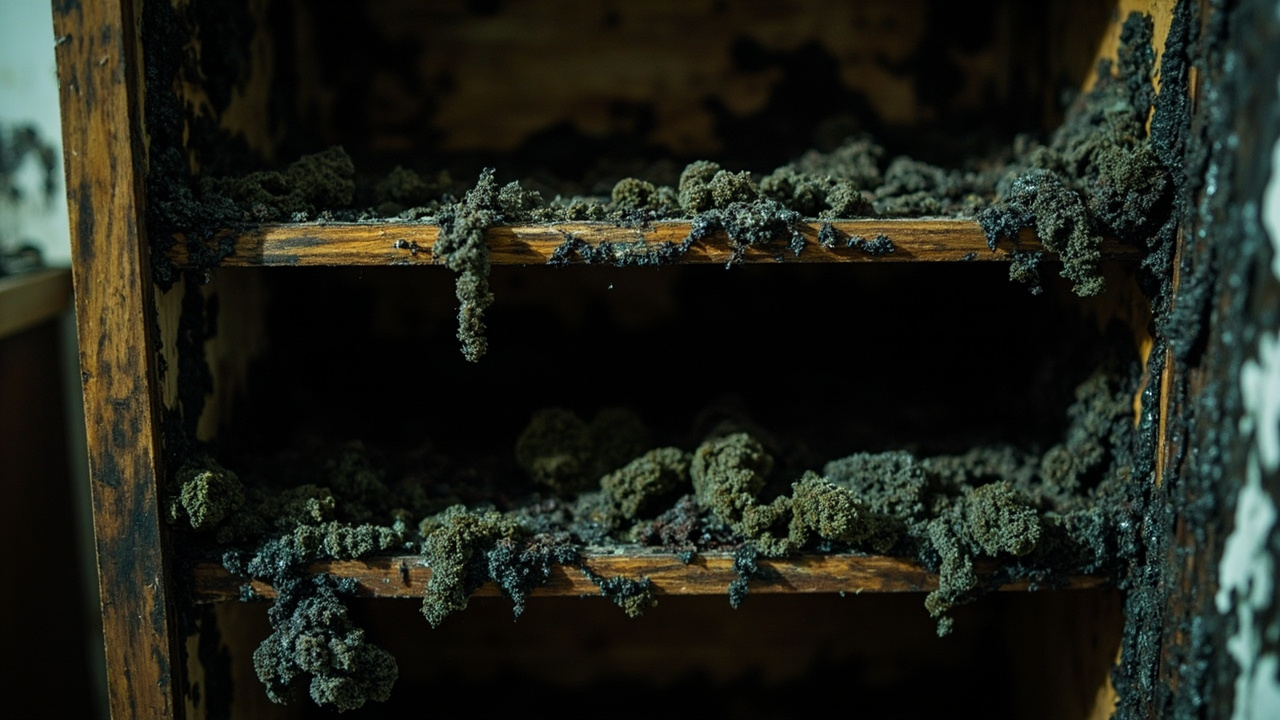
You open the cabinet under your bathroom sink and smell it before you see it. That earthy, musty odor. Then you spot the dark patches creeping up the back panel or spreading across the bottom shelf. Bathroom vanity mold is not just unsightly. It signals a plumbing problem that will only get worse.

Louisville's humid summers create ideal conditions for mold growth inside vanity cabinets. When daytime temperatures hit the high 80s and humidity hovers near 70 percent, any moisture trapped in a closed cabinet becomes a breeding ground. Add a slow drip from a supply line or a poorly sealed sink drain, and you have mold under the bathroom sink within weeks.

Mildew in bathroom cabinets often starts small. A faint discoloration on particleboard. A slightly damp smell when you reach for cleaning supplies. But mold growth inside vanity units accelerates fast once the spores take hold. The particleboard and MDF common in builder-grade vanities absorb water like a sponge. Once saturated, the material swells, weakens, and becomes a permanent host for bathroom cupboard mold.

Many homeowners mistake this for a cleaning problem. They scrub the visible mold with bleach and close the door. The mold returns in days because the source is still active. A pinhole leak in a compression fitting. A corroded P-trap gasket. A supply line that drips three drops per hour. You cannot clean your way out of a plumbing failure.

The longer you wait, the more damage occurs. Mold spreads to adjacent walls. The subfloor starts to soften. You begin to smell it in the hallway. What started as a small leak becomes a full vanity replacement and subfloor repair.

Why Louisville Bathroom Cabinets Grow Mold Faster Than You Think
How We Stop Mold by Fixing the Plumbing Problem

How We Stop Mold by Fixing the Plumbing Problem

Mold remediation companies remove mold. We fix why it grew in the first place. Victory Plumbing Louisville treats bathroom vanity mold as a symptom of a failed plumbing component. Our diagnostic process identifies every moisture source feeding the mold growth inside vanity cabinets.

We start by isolating the water supply and draining the lines. Then we inspect every connection point under the sink. Compression fittings on angle stops. The tailpiece connection to the P-trap. The slip nut seal where the trap connects to the drain arm. We check for weeping joints, corrosion, and failed thread tape. We use a moisture meter to map the extent of water penetration into the cabinet walls and floor.

Next, we test the sink drain seal. We plug the drain, fill the basin, and watch for leaks at the flange. A failed plumber's putty seal or loose locknut allows water to seep into the cabinet every time you use the sink. This type of leak is slow and silent, but it saturates the vanity over months.

We also inspect the faucet supply lines. Braided stainless lines can develop pinhole leaks at the crimped ends. Plastic supply tubes crack at the ferrule. Older copper supply tubes corrode at the compression fitting. Each of these failures delivers a steady drip that pools at the cabinet floor and wicks into the particleboard.

Once we identify the source, we replace the failed components with code-compliant materials. We use brass compression fittings, reinforced supply lines, and properly torqued slip nuts. We re-seal sink drains with fresh plumber's putty or silicone, depending on the sink material. Then we verify every connection under pressure before we leave.

What Happens When You Call Us About Mold Under Your Sink

Mold in Bathroom Cabinets in Louisville – Expert Diagnosis and Permanent Plumbing Fixes
01

Moisture Source Identification

We inspect every plumbing connection under your bathroom sink using a flashlight and moisture meter. We trace water stains on the cabinet walls, check for active drips, and test the sink drain seal. We identify whether the mold is fed by a supply line leak, a drain leak, or condensation from a cold water pipe.
02

Component Replacement and Sealing

We replace the failed plumbing component causing the leak. This might be a corroded angle stop, a cracked P-trap, or a degraded supply line. We re-seal the sink drain if the flange is leaking. We use brass fittings and code-compliant materials. Every connection is hand-tightened to the correct torque to prevent future leaks.
03

Leak Test and Prevention Plan

We pressurize the supply lines and run water through the drain to test for leaks. We check every joint under load. Then we give you a clear prevention plan. We explain which components to monitor, how often to check for moisture, and when to replace aging supply lines before they fail.

Why Louisville Homeowners Trust Us to Fix Mold-Causing Leaks

Mold under bathroom sinks is a common problem in Louisville homes built between 1980 and 2010. Many of these homes used particleboard vanities with compression fittings that corrode in our humid climate. The Ohio River valley's moisture levels accelerate the degradation of rubber gaskets and plastic washers. A fitting that holds for ten years in a dry climate fails in five here.

We see this pattern in neighborhoods like Highlands, Crescent Hill, and St. Matthews. Homes with original plumbing often have galvanized angle stops that have rusted internally. The shut-off valve still turns, but the threads weep water when the pressure spikes during the morning shower rush. That slow seepage saturates the cabinet floor and feeds bathroom cupboard mold year-round.

Victory Plumbing Louisville has worked in these neighborhoods long enough to recognize the plumbing signatures of each era. We know which supply line brands fail first. We know which vanity manufacturers used the thinnest particleboard. We know where the subfloor tends to rot first based on joist spacing and drain placement.

We also understand Louisville's building codes and the difference between a repair that meets code and one that passes inspection. When we replace an angle stop or re-pipe a sink drain, we use materials that meet current plumbing standards. This matters if you plan to sell your home or file an insurance claim related to water damage.

Our service trucks carry the fittings, supply lines, and drain components needed for same-day repairs. We do not leave your bathroom sink out of service while we order parts. We fix the leak, stop the moisture source, and give you a clear explanation of what failed and why.

What to Expect When We Address Your Bathroom Cabinet Mold

Same-Day Leak Diagnosis

We respond to mold-related leak calls within the same business day in most Louisville neighborhoods. Our plumbers arrive with diagnostic tools and common repair parts. We spend 20 to 30 minutes inspecting your vanity plumbing, testing connections, and mapping moisture spread. You get a clear diagnosis and a repair estimate before any work begins. If you approve the repair, we complete it during the same visit in most cases.

Thorough Plumbing Inspection

We do not just fix the obvious drip. We inspect the entire sink plumbing system, including angle stops, supply lines, the P-trap assembly, and the drain flange seal. We check for corrosion, loose fittings, and aging components that might fail next. You get a written summary of what we found, what we fixed, and what to monitor going forward. This prevents repeat service calls and future mold growth.

Code-Compliant Repairs

Every component we install meets current Louisville plumbing codes. We use brass angle stops, reinforced stainless supply lines, and schedule 40 PVC or ABS drain fittings. We hand-tighten connections to manufacturer specifications to prevent overtightening and undertightening. You get a repair that will pass inspection and hold up under Louisville's humidity and pressure fluctuations. We stand behind the quality of every fitting we install.

Follow-Up Guidance

After we fix the leak, we explain how to monitor for future problems. We show you how to check for moisture under the sink, how to spot early signs of a failing supply line, and when to replace components before they leak. We also provide guidance on improving ventilation in the bathroom to reduce humidity. If mold returns after we fix the plumbing, we come back to verify the repair and check for secondary moisture sources at no additional diagnostic charge.

Frequently Asked Questions

You Have Questions,
We Have Answers

Why is there mold in my bathroom cabinet? +

Mold grows in bathroom cabinets when moisture gets trapped inside. Louisville's high humidity, especially during summer months, makes this worse. Leaky pipes under sinks create constant dampness. Poor ventilation means moisture from showers and baths settles into cabinet spaces. Water splashes from sink use also contribute. The dark, enclosed environment inside cabinets gives mold the perfect breeding ground. Older homes in neighborhoods like Old Louisville often have plumbing that leaks slowly without obvious signs. Even condensation on cold pipes can drip and create mold issues. You need to fix the moisture source first, then address the mold growth.

Will mold go away if it dries out? +

No, mold does not go away when it dries out. Dry mold becomes dormant, but the spores stay alive and ready to grow again when moisture returns. Louisville's humid climate means moisture will come back. Dead mold can still cause respiratory issues and allergic reactions. Drying out the area stops active growth temporarily, but you must physically remove the mold. Simply airing out your cabinet is not enough. The spores embed in porous materials like wood and drywall. You need proper cleaning or removal of affected materials. If the contamination is extensive, professional remediation prevents the problem from spreading throughout your home.

Is black mold in bathrooms toxic? +

Black mold in bathrooms can be toxic, but not all black mold is the dangerous Stachybotrys chartarum species. Many black-colored molds are common household varieties. That said, all mold poses health risks. You can experience respiratory problems, headaches, and allergic reactions regardless of species. People with asthma or weakened immune systems face greater danger. Louisville's older housing stock often has hidden moisture problems that support toxic mold growth. Do not try to identify the species yourself. Assume all mold is hazardous and handle it carefully. Wear protective gear during small cleanups. For large areas or if you experience health symptoms, call a professional to test and remove it safely.

What to do if you find mold in cabinets? +

First, stop using the cabinet and ventilate the bathroom. Open windows and run exhaust fans. Identify and fix the moisture source, whether it is a leaky pipe, poor ventilation, or condensation. For small areas under three square feet, you can clean non-porous surfaces with detergent and water. Wear gloves, eye protection, and an N95 mask. Throw away porous items like cardboard or fabric that show mold. For larger contamination, especially on wood cabinet structures, you need professional help. Louisville homes with persistent humidity problems require proper remediation to prevent return growth. Do not paint over mold or use bleach on wood, as this spreads spores.

How Louisville's Humidity Turns Small Plumbing Leaks Into Mold Problems

Louisville's average relative humidity stays above 65 percent from May through September. When you combine that with a bathroom cabinet that stays closed most of the day, even a minor plumbing leak creates perfect mold conditions. A supply line that drips twice per hour might only release a few ounces of water per day, but in a humid, enclosed space, that moisture never fully evaporates. It soaks into the particleboard, creating a damp environment where mildew in bathroom cabinets thrives. Homes near the Ohio River or in low-lying areas like Shively and Valley Station face even higher ambient moisture levels, which accelerates mold growth inside vanity units.

Victory Plumbing Louisville works with homeowners across Jefferson County who deal with bathroom vanity mold caused by aging plumbing. We understand the local housing stock and which plumbing materials hold up in our climate. Many Louisville homes built in the 1990s used compression fittings and plastic P-traps that degrade faster in humid conditions. We replace these with longer-lasting materials and give you a realistic timeline for future maintenance. Choosing a local plumber means you work with someone who has seen your exact house layout and plumbing configuration hundreds of times before.

Plumbing Services in The Louisville Area

We are proud to serve the entire Louisville metropolitan area and its surrounding communities. Our convenient location allows us to provide swift and reliable service to homes and businesses throughout the region. Whether you're in the heart of the city or a nearby suburb, we’re never far away. Visit our office or give us a call to discuss your plumbing needs. We look forward to being your trusted local plumbing partner.

Address:
Victory Plumbing Louisville, 2600 W Broadway, Louisville, KY, 40211

Additional Services We Offer

Our news updates

Latest Articles & News from The Blogs

Stopping the Banging Sound in Your Pipes with Water Hammer Arrestors in Shively That sudden banging noise when you turn…

Stopping the Banging Sound in Your Pipes with Water Hammer Arrestors in Shively

Stopping the Banging Sound in Your Pipes with Water Hammer Arrestors in Shively That sudden banging noise when you turn…

Identifying Dangerous Water Heater Venting Issues in Your Historic Old Louisville Home

Identifying Dangerous Water Heater Venting Issues in Your Historic Old Louisville Home Water heater venting problems in Old Louisville’s historic…

The Truth About Flushable Wipes and Why They Keep Clogging Pipes in Hikes Point

The Truth About Flushable Wipes and Why They Keep Clogging Pipes in Hikes Point Flushable wipes might seem convenient but…

Contact Us

Call Victory Plumbing Louisville at (502) 370-2677 to schedule a same-day plumbing inspection. We identify the leak causing your bathroom cabinet mold and fix it right the first time.