
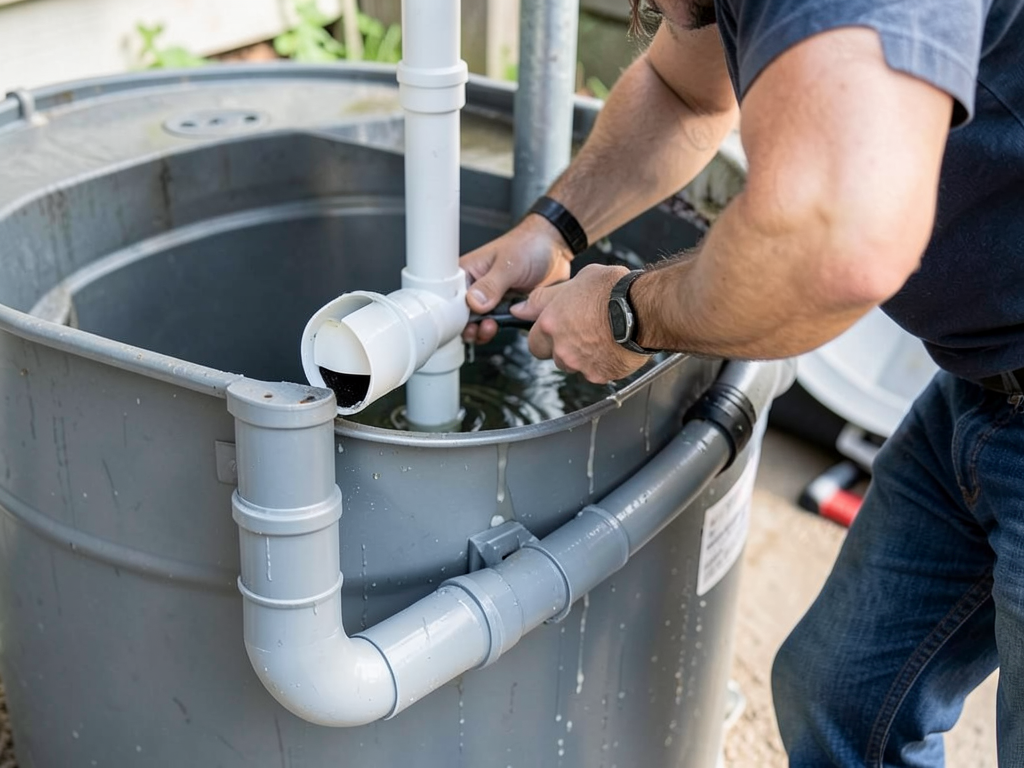
Connecting Rain Barrels to Your Butchertown Gutter System the Right Way
Rain barrels offer Butchertown homeowners a smart way to capture stormwater runoff while reducing municipal water usage. With Louisville’s average annual rainfall exceeding 45 inches and Butchertown’s historic homes featuring large roof footprints, a properly installed rain barrel system can collect hundreds of gallons during a single storm. The key is connecting your rain barrel to your gutter system using the right components and techniques that prevent overflow, protect your foundation, and comply with Louisville Metro regulations. Louisville MSD RainCheck program.
Essential Components for a Secure Connection
A reliable rain barrel setup requires specific plumbing parts that work together to create a leak-free system. The bulkhead fitting serves as the primary connection point, creating a watertight seal through the barrel wall. For Butchertown’s older homes with cast iron downspouts, you’ll need a downspout diverter that matches your existing pipe diameter. Most residential systems use 2×3 or 3×4 inch downspouts, so measure before purchasing. The Cost of Tankless Water Heater Installation in Jeffersontown.
The overflow valve prevents hydrostatic pressure buildup when the barrel reaches capacity. Without proper overflow management, water can back up into your gutter system and cause fascia board rot. A 1.5-inch diameter overflow pipe provides adequate capacity for Louisville’s heavy downpours. Include a debris screen at both the downspout entry and overflow exit to prevent clogs from leaves and twigs common in Butchertown’s mature tree canopy. Fixing Low Water Pressure in Your Crescent Hill Bungalow.
Material selection matters for Louisville’s freeze-thaw cycles. Use UV-resistant PVC for above-ground connections and schedule 40 PVC for underground overflow lines. Brass spigots outlast plastic versions and resist Louisville’s hard water mineral buildup. Install a first-flush diverter to capture the initial roof runoff containing debris and contaminants before water enters your storage barrel.. Read more about Installing a Dedicated Water Meter for Your Irrigation System in Anchorage.
Step-by-Step: How to Connect Your Rain Barrel to Downspouts
- Choose the Optimal Location
Position your rain barrel on a level surface at least 12 inches above ground level. This height provides adequate gravity pressure for garden hoses. Butchertown’s sloped lots often require leveling blocks or a small platform. Keep the barrel at least 5 feet from your foundation to prevent water seepage into basements common in historic Butchertown homes. EPA WaterSense outdoor water use guidelines.
- Prepare the Downspout
Mark the downspout at the height where the diverter will install. Use a hacksaw to cut the downspout, ensuring straight cuts for proper diverter fit. For Butchertown’s older homes, you may encounter corroded sections that require complete replacement rather than modification.
- Install the Bulkhead Fitting
Drill a hole in the rain barrel using a hole saw bit matching your bulkhead fitting size. Apply silicone sealant around the fitting before insertion. Tighten the bulkhead nut until the rubber gasket compresses fully, creating a watertight seal. Test by filling the barrel and checking for leaks around the fitting.
- Connect the Diverter
Attach the diverter to your cut downspout using the manufacturer’s brackets. Connect the diverter’s outlet hose to your barrel’s bulkhead fitting using stainless steel hose clamps. For Louisville’s temperature swings, use flexible PVC rather than rigid connections to accommodate expansion and contraction.
- Configure the Overflow System
Install the overflow valve near the top of the barrel. Connect a discharge hose directing water at least 10 feet from your foundation. In Butchertown’s clay-heavy soil, consider extending the overflow to a dry well or rain garden to prevent foundation saturation.
Plumbing Code and Safety: What Louisville Residents Need to Know
Louisville Metro requires proper backflow prevention when connecting any water storage system to your home’s plumbing. Kentucky State Plumbing Code Section 815.3 mandates that rainwater harvesting systems include an air gap or reduced pressure principle backflow preventer when connected to any potable water supply. This prevents contamination of your household water during pressure fluctuations. Backflow Prevention & Testing.
The Louisville MSD offers the RainCheck program providing rebates for rain barrel installations that meet specific criteria. Systems must include mosquito screening, proper overflow management, and be installed at least 3 feet from any building opening. The program requires documentation showing your system can handle a 1-inch rainfall event without overflow onto adjacent properties. How to Handle a Main Sewer Line Backup in Your St. Matthews Home.
Foundation protection represents the most critical safety consideration. Butchertown’s historic homes often sit on shallow foundations vulnerable to hydrostatic pressure. Calculate your roof’s water collection potential using this formula: Roof square footage x 0.623 gallons per square foot per inch of rain. A 1,000 square foot roof collects 623 gallons from just one inch of rainfall.
Winterization becomes essential for Louisville’s freeze-thaw cycles. Drain your system before the first hard freeze, typically occurring by mid-November. Disconnect hoses, open all valves, and store diverters indoors. Frozen water expands approximately 9% in volume, cracking barrels and splitting fittings. Consider insulated covers for above-ground pipes in exposed locations.
Common Mistakes in Rain Barrel Hookups (and How to Avoid Them)
Improper barrel elevation causes the most frequent performance issues. Installing barrels at ground level provides insufficient pressure for garden hoses or drip irrigation. The minimum 12-inch elevation creates approximately 0.43 PSI of pressure per foot of height. For effective irrigation, aim for 24-30 inches of elevation.
Neglecting overflow capacity leads to foundation damage. Many homeowners install barrels without considering what happens when they fill during Louisville’s heavy storms. A 55-gallon barrel connected to a 1,000 square foot roof section fills in less than 0.1 inches of rainfall. Without adequate overflow, water backs up into gutters and seeps along foundation walls.
Using incorrect fittings causes chronic leaks. Standard garden hose connections cannot withstand the pressure of a full rain barrel. Always use bulkhead fittings designed for liquid storage applications. The rubber gasket must be marine-grade to resist Louisville’s UV exposure and temperature extremes.. Read more about The Difference Between Standard and Frost-Proof Outdoor Faucets for Your St. Matthews Garden.
Ignoring mosquito prevention creates health hazards. Standing water in rain barrels breeds mosquitoes that carry West Nile virus. Kentucky’s warm, humid climate accelerates mosquito reproduction cycles. Install fine mesh screens (1/16 inch or smaller) at all openings and consider mosquito dunks containing Bacillus thuringiensis israelensis for biological control.
Professional Installation vs. DIY: When to Call a Louisville Plumber
DIY installation works for simple systems on single-story homes with accessible downspouts. However, professional installation becomes necessary when dealing with multiple barrels, underground plumbing connections, or integration with existing irrigation systems. Louisville’s licensed plumbers understand local soil conditions, frost depths, and building code requirements that affect long-term system performance.. Read more about Specialized Plumbing and Hair Traps for New Salon Owners in Butchertown.
Complex situations requiring professional expertise include connecting to French drains, installing permanent underground overflow lines, or integrating with greywater recycling systems. These installations often require permits and inspections through Louisville Metro’s building department. Professional plumbers can also assess your foundation’s vulnerability to water damage and recommend appropriate overflow solutions.
Cost factors for professional installation vary based on system complexity. A basic single-barrel setup might cost $300-500 including parts and labor. Multi-barrel systems with underground plumbing typically range from $800-1,500. These investments often pay for themselves within 3-5 years through reduced water bills and stormwater fee credits available through Louisville MSD.
Professional installation ensures compliance with Kentucky’s plumbing regulations and Louisville’s stormwater management requirements. Licensed plumbers carry liability insurance protecting you from damages caused by improper installation. They also provide warranties on workmanship and can troubleshoot issues that arise during Louisville’s seasonal weather changes. Protecting Your Anchorage Basement with a Reliable Sump Pump System.
Maintaining Your Rain Barrel System Year-Round
Regular maintenance prevents system failures and extends component life. Check bulkhead fittings quarterly for signs of wear or loosening. Clean debris screens monthly during heavy leaf fall seasons common in Butchertown’s mature neighborhoods. Flush the entire system twice yearly to remove sediment that accumulates in barrel bottoms.
Winter preparation requires specific steps for Louisville’s climate. Disconnect and drain all hoses by November 1st. Open barrel spigots to prevent freezing damage. Store diverters indoors or in a protected location. Consider using compressed air to blow out underground lines if you have extended overflow systems.
Spring startup involves inspecting all components for winter damage. Check for cracks in barrels caused by freeze expansion. Test all seals and gaskets, replacing any showing signs of deterioration. Clean the entire system thoroughly before reconnecting to prevent contamination of your collected water.
Summer maintenance focuses on mosquito prevention and algae control. Keep barrels covered when not in use. Add a small amount of vegetable oil to the water surface to create a barrier preventing mosquito breeding. Clean barrels annually using a mild bleach solution (1 cup per 50 gallons) to prevent algae growth.
Your rain barrel system represents a significant investment in sustainable water management for your Butchertown home. Proper installation and maintenance ensure years of reliable performance while protecting your foundation and complying with local regulations. Whether you choose DIY installation or professional help, understanding these principles helps you make informed decisions about your rainwater harvesting system.
Call (502) 370-2677 today to schedule your inspection and ensure your rain barrel system meets Louisville’s plumbing standards while protecting your Butchertown home from water damage.
Frequently Asked Questions
How much rainwater can I collect from my Butchertown roof?
A 1,000 square foot roof section collects approximately 623 gallons from one inch of rainfall. Butchertown’s average annual rainfall of 45 inches means a properly sized system could collect over 28,000 gallons yearly from a typical home’s roof area.
Do I need a permit to install rain barrels in Louisville?
Single rain barrels typically don’t require permits, but systems with underground plumbing, multiple barrels, or connections to existing drainage systems may need permits through Louisville Metro’s building department. The Louisville MSD RainCheck program provides guidance on compliant installations.
How do I prevent mosquitoes in my rain barrel?
Install fine mesh screens (1/16 inch or smaller) at all openings and use mosquito dunks containing Bacillus thuringiensis israelensis. Keep barrels covered when not in use and consider adding a small amount of vegetable oil to create a surface barrier preventing mosquito breeding.
What happens if my rain barrel overflows during a storm?
Without proper overflow management, water backs up into gutters and can cause fascia board rot or foundation damage. Install a 1.5-inch overflow valve with a discharge hose directing water at least 10 feet from your foundation. In Butchertown’s clay soil, consider extending overflow to a dry well.
Can I use rain barrel water for my vegetable garden?
Rain barrel water is non-potable and should not contact edible plant parts directly. However, it’s safe for drip irrigation beneath mulch or for watering ornamental plants. Always wash vegetables thoroughly if any rain barrel water contacts them during overhead watering.
{
“@context”: “https://schema.org”,
“@type”: “BlogPosting”,
“headline”: “Connecting Rain Barrels to Your Butchertown Gutter System the Right Way”,
“description”: “Learn how to properly connect rain barrels to your Butchertown gutters. Expert tips on diverters, overflow, and Louisville MSD compliance for sustainable water collection.”,
“wordCount”: 1760,
“datePublished”: “2026-05-07T10:41:00.000Z”,
“dateModified”: “2026-05-07T10:41:00.000Z”,
“inLanguage”: “en-US”,
“mainEntityOfPage”: {
“@type”: “WebPage”,
“@id”: “https://victoryplumbinglouisville.com”
},
“publisher”: {
“@type”: “LocalBusiness”,
“name”: “Victory Plumbing Louisville”,
“url”: “https://victoryplumbinglouisville.com”
},
“author”: {
“@type”: “Organization”,
“name”: “Victory Plumbing Louisville”,
“url”: “https://victoryplumbinglouisville.com”
},
“image”: {
“@type”: “ImageObject”,
“url”: “https://victoryplumbinglouisville.com/wp-content/uploads/2026/03/connecting-rain-barrels-to-your-butchertown-gutter-1.png”
}
}
{
“@context”: “https://schema.org”,
“@type”: “Plumber”,
“name”: “Victory Plumbing Louisville”,
“url”: “https://victoryplumbinglouisville.com”,
“address”: {
“@type”: “PostalAddress”,
“addressLocality”: “Louisville”
},
“areaServed”: {
“@type”: “City”,
“name”: “Louisville”
}
}
{
“@context”: “https://schema.org”,
“@type”: “FAQPage”,
“mainEntity”: [
{
“@type”: “Question”,
“name”: “How much rainwater can I collect from my Butchertown roof?”,
“acceptedAnswer”: {
“@type”: “Answer”,
“text”: “A 1,000 square foot roof section collects approximately 623 gallons from one inch of rainfall. Butchertown’s average annual rainfall of 45 inches means a properly sized system could collect over 28,000 gallons yearly from a typical home’s roof area.”
}
},
{
“@type”: “Question”,
“name”: “Do I need a permit to install rain barrels in Louisville?”,
“acceptedAnswer”: {
“@type”: “Answer”,
“text”: “Single rain barrels typically don’t require permits, but systems with underground plumbing, multiple barrels, or connections to existing drainage systems may need permits through Louisville Metro’s building department. The Louisville MSD RainCheck program provides guidance on compliant installations.”
}
},
{
“@type”: “Question”,
“name”: “How do I prevent mosquitoes in my rain barrel?”,
“acceptedAnswer”: {
“@type”: “Answer”,
“text”: “Install fine mesh screens (1/16 inch or smaller) at all openings and use mosquito dunks containing Bacillus thuringiensis israelensis. Keep barrels covered when not in use and consider adding a small amount of vegetable oil to create a surface barrier preventing mosquito breeding.”
}
},
{
“@type”: “Question”,
“name”: “What happens if my rain barrel overflows during a storm?”,
“acceptedAnswer”: {
“@type”: “Answer”,
“text”: “Without proper overflow management, water backs up into gutters and can cause fascia board rot or foundation damage. Install a 1.5-inch overflow valve with a discharge hose directing water at least 10 feet from your foundation. In Butchertown’s clay soil, consider extending overflow to a dry well.”
}
},
{
“@type”: “Question”,
“name”: “Can I use rain barrel water for my vegetable garden?”,
“acceptedAnswer”: {
“@type”: “Answer”,
“text”: “Rain barrel water is non-potable and should not contact edible plant parts directly. However, it’s safe for drip irrigation beneath mulch or for watering ornamental plants. Always wash vegetables thoroughly if any rain barrel water contacts them during overhead watering.”
}
}
]
}
{
“@context”: “https://schema.org”,
“@type”: “HowTo”,
“name”: “How to Connect Rain Barrel to Downspouts”,
“step”: [
{
“@type”: “HowToStep”,
“position”: 1,
“name”: “Choose the Optimal Location”,
“text”: “Position your rain barrel on a level surface at least 12 inches above ground level. This height provides adequate gravity pressure for garden hoses. Butchertown’s sloped lots often require leveling blocks or a small platform. Keep the barrel at least 5 feet from your foundation to prevent water seepage into basements common in historic Butchertown homes. EPA WaterSense outdoor water use guidelines.”
},
{
“@type”: “HowToStep”,
“position”: 2,
“name”: “Prepare the Downspout”,
“text”: “Mark the downspout at the height where the diverter will install. Use a hacksaw to cut the downspout, ensuring straight cuts for proper diverter fit. For Butchertown’s older homes, you may encounter corroded sections that require complete replacement rather than modification.”
},
{
“@type”: “HowToStep”,
“position”: 3,
“name”: “Install the Bulkhead Fitting”,
“text”: “Drill a hole in the rain barrel using a hole saw bit matching your bulkhead fitting size. Apply silicone sealant around the fitting before insertion. Tighten the bulkhead nut until the rubber gasket compresses fully, creating a watertight seal. Test by filling the barrel and checking for leaks around the fitting.”
},
{
“@type”: “HowToStep”,
“position”: 4,
“name”: “Connect the Diverter”,
“text”: “Attach the diverter to your cut downspout using the manufacturer’s brackets. Connect the diverter’s outlet hose to your barrel’s bulkhead fitting using stainless steel hose clamps. For Louisville’s temperature swings, use flexible PVC rather than rigid connections to accommodate expansion and contraction.”
},
{
“@type”: “HowToStep”,
“position”: 5,
“name”: “Configure the Overflow System”,
“text”: “Install the overflow valve near the top of the barrel. Connect a discharge hose directing water at least 10 feet from your foundation. In Butchertown’s clay-heavy soil, consider extending the overflow to a dry well or rain garden to prevent foundation saturation.”
}
],
“image”: “https://victoryplumbinglouisville.com/wp-content/uploads/2026/03/connecting-rain-barrels-to-your-butchertown-gutter-1.png”
}
{
“@context”: “https://schema.org”,
“@type”: “BreadcrumbList”,
“itemListElement”: [
{
“@type”: “ListItem”,
“position”: 1,
“name”: “Home”,
“item”: “https://victoryplumbinglouisville.com”
},
{
“@type”: “ListItem”,
“position”: 2,
“name”: “Blog”,
“item”: “https://victoryplumbinglouisville.com/blog”
},
{
“@type”: “ListItem”,
“position”: 3,
“name”: “Connecting Rain Barrels to Your Butchertown Gutter System the Right Way”
}
]
}
{
“@context”: “https://schema.org”,
“@type”: “Service”,
“serviceType”: “Plumbing”,
“provider”: {
“@type”: “LocalBusiness”,
“name”: “Victory Plumbing Louisville”,
“url”: “https://victoryplumbinglouisville.com”
},
“areaServed”: {
“@type”: “City”,
“name”: “Louisville”
},
“description”: “Learn how to properly connect rain barrels to your Butchertown gutters. Expert tips on diverters, overflow, and Louisville MSD compliance for sustainable water collection.”
}