
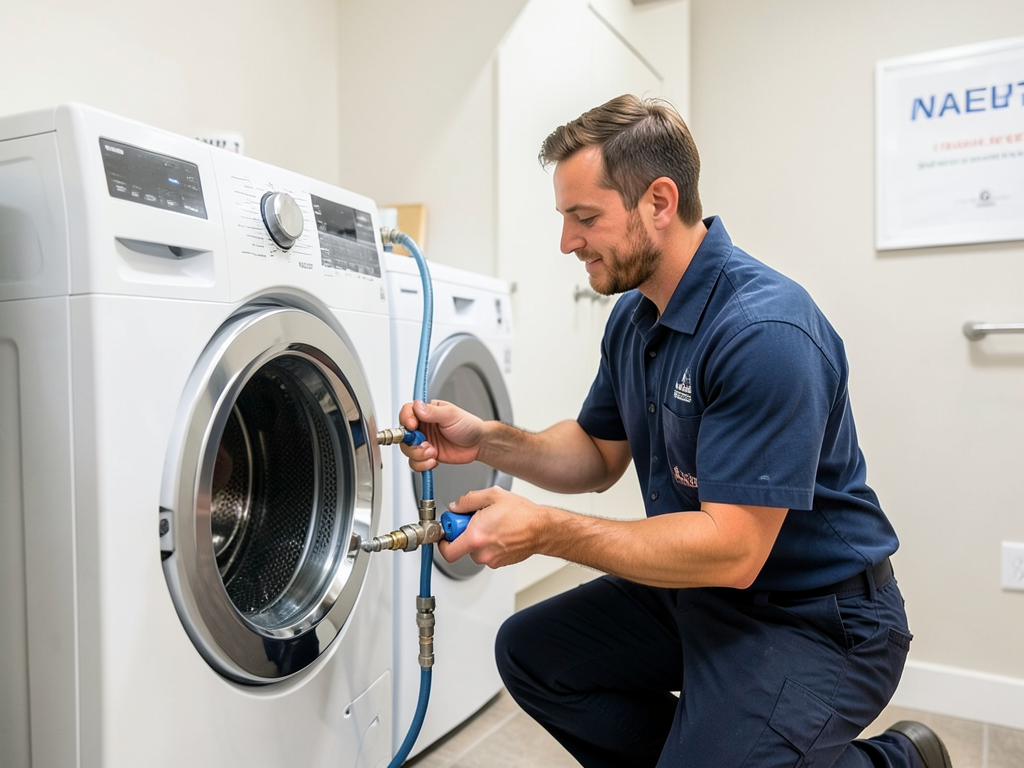
Moving your laundry room upstairs in your Fern Creek home offers convenience but creates serious flood risks if not properly protected. Water damage from a second-floor washing machine can destroy ceilings, walls, and flooring below before you even notice the leak. The good news is that with the right plumbing components and Louisville-specific code compliance, you can enjoy upstairs laundry without the worry. The Cost of Tankless Water Heater Installation in Jeffersontown.
Second-floor laundry rooms require three critical protections: automatic shut-off valves that detect leaks before major damage occurs, properly installed drain pans that catch overflow, and code-compliant drainage systems that prevent backups. These systems work together to protect your home from the most common failure points in upstairs laundry setups.
Understanding Second Floor Laundry Room Risks in Fern Creek Homes
Fern Creek homes, particularly those built after 2000 in developments like South Park and Liberty Green, often feature second-floor laundry rooms as a modern convenience. However, these installations create unique vulnerabilities that ground-floor setups don’t face. When a washing machine leaks on the first floor, water spreads across the floor and you notice it quickly. When it happens upstairs, water can travel through ceiling cavities, down walls, and into electrical systems before you hear the first drip. Fixing Low Water Pressure in Your Crescent Hill Bungalow.
The most common failure points include supply line bursts, drain hose disconnections, and pump failures. A standard washing machine uses 15-30 gallons per load, and when that water escapes on the second floor, gravity ensures it finds the path of least resistance straight down through your home’s structure. The damage can be catastrophic, often requiring extensive drywall replacement, ceiling repairs, and sometimes even structural work. EPA WaterSense standards.
Local building patterns in Fern Creek also contribute to the risk. Many homes in the area feature open floor plans with vaulted ceilings on the first floor, meaning water from a second-floor leak has nowhere to pool and be contained. Instead, it spreads across large ceiling areas, saturating insulation and creating perfect conditions for mold growth within 24-48 hours.
Essential Components for Second Floor Laundry Protection
Protecting your second-floor laundry room requires multiple layers of defense. No single component provides complete protection, but together they create a comprehensive safety system that can prevent thousands of dollars in damage. Protecting Your Anchorage Basement with a Reliable Sump Pump System.
Automatic Shut-Off Valves: Your First Line of Defense
Automatic shut-off valves represent the most important protection for second-floor laundry rooms. These devices connect to both hot and cold supply lines and use sensors to detect water flow patterns that indicate a leak. When abnormal flow is detected, the valve immediately shuts off water supply to the washing machine.
Modern systems like the LeakSmart or FloodStop can detect leaks within seconds and shut off water in under 5 seconds. They connect to your home’s Wi-Fi and send instant alerts to your smartphone, allowing you to respond even when you’re not home. Some advanced models integrate with smart home systems and can automatically trigger other safety protocols like turning off power to the laundry room.
Installation requires cutting into existing supply lines and connecting the valve system, which should be done by a licensed plumber familiar with Louisville’s water pressure variations. The average installation takes 2-3 hours and costs between $450-750, depending on your existing plumbing configuration.
Drain Pans: Catching the Overflow
A properly sized drain pan sits beneath your washing machine and catches any water that escapes from the machine itself or from supply line failures. For second-floor installations, the pan must be at least 2 inches larger than the washing machine on all sides and have a built-in drain connection.
The drain pan connects to your home’s drainage system through a 1.5-inch PVC pipe that leads to the main stack or a dedicated floor drain. This ensures that any water collected in the pan is safely removed rather than pooling and eventually overflowing onto your floor.
Material selection matters significantly. Heavy-duty plastic pans work for most applications, but stainless steel provides superior durability and resistance to cracking over time. The pan must be perfectly level during installation to ensure proper drainage and prevent water from pooling in low spots.
Floor Drains: The Ultimate Backup
While not always required by code, a floor drain in your second-floor laundry room provides the ultimate backup protection. This drain connects directly to your home’s waste system and can handle large volumes of water in emergency situations. How to Handle a Main Sewer Line Backup in Your St. Matthews Home.
Floor drains require a P-trap to prevent sewer gases from entering your home and must be installed with proper slope to ensure complete drainage. In Fern Creek homes, where the water table can be high during rainy seasons, a properly installed floor drain can mean the difference between a minor incident and major flood damage.
The drain should be positioned in the lowest part of the laundry room floor and covered with a removable grate for easy cleaning. Regular maintenance includes pouring water down the drain monthly to ensure the trap remains filled and functional.
Kentucky Plumbing Code Requirements for Upstairs Laundry
Second-floor laundry installations in Kentucky must comply with the Kentucky State Plumbing Code, which includes specific requirements for drainage, venting, and safety devices. Understanding these requirements helps ensure your installation is both safe and legal. Kentucky State Plumbing Code.
The code requires that all washing machine drains connect to an approved waste system through a properly vented standpipe. The standpipe must extend between 18 and 30 inches above the trap weir and have a minimum diameter of 2 inches for standard washing machines. This height prevents the machine’s pump from causing backflow while still allowing proper drainage.
Venting requirements are particularly important for second-floor installations. The washing machine drain must connect to a vent stack that extends through the roof or connect to an approved air admittance valve (AAV). Without proper venting, the system can experience pressure imbalances that cause slow drainage, gurgling sounds, and eventual trap seal failure.
Water hammer arrestors are required on both hot and cold supply lines to prevent the shock waves that occur when washing machine valves close rapidly. These devices absorb the pressure surge and protect your plumbing system from damage that could lead to supply line failures.
Local permits are required for all new laundry room installations in Jefferson County. The permit process includes plan review to ensure compliance with all code requirements and inspections at key stages of the installation. Working with a licensed plumber familiar with local requirements can streamline this process significantly.
Structural Considerations for Second Floor Laundry Rooms
Beyond plumbing requirements, second-floor laundry rooms present structural challenges that must be addressed during planning and installation. The weight of modern washing machines, particularly when filled with water and clothes, creates significant point loads on floor joists.
A typical high-efficiency washing machine weighs 150-200 pounds empty and can reach 300-400 pounds when fully loaded with water and clothes. This concentrated weight requires proper floor support to prevent joist sagging, which can lead to drainage problems and eventual structural failure.
Floor joists in most Fern Creek homes are spaced 16 inches on center and are typically 2×10 or 2×12 lumber, depending on the home’s age and design. Before installing a second-floor laundry room, a structural evaluation should determine whether existing joists can support the additional load or if reinforcement is needed.
Reinforcement options include adding support beams below the laundry room, installing additional joists alongside existing ones, or using engineered lumber products that provide greater strength than standard dimensional lumber. The cost of structural reinforcement varies widely based on your home’s specific construction but typically ranges from $1,500 to $4,000.
Vibration is another critical consideration. Washing machines generate significant vibration during spin cycles, which can transmit through floors and walls, causing noise complaints and even structural fatigue over time. Anti-vibration pads and mounts can reduce this transmission by up to 80%, protecting both your home and your relationship with family members or neighbors below.
Installation Best Practices for Maximum Protection
Proper installation techniques can significantly reduce the risk of laundry room floods. These best practices go beyond basic code compliance to provide maximum protection for your home.
Supply line selection is critical. Stainless steel braided hoses offer superior burst resistance compared to standard rubber hoses and should be used for all second-floor laundry installations. These hoses feature a flexible inner tube surrounded by braided stainless steel, providing both flexibility and exceptional strength.
Connection techniques matter as much as the materials used. All threaded connections should be wrapped with Teflon tape and tightened to manufacturer specifications. Over-tightening can damage threads and create weak points, while under-tightening leads to slow leaks that can cause significant damage over time.
Access panels should be installed to allow inspection of supply lines and drain connections. These panels, typically 12×12 inches, provide access to the areas most likely to develop leaks and allow for early detection before major damage occurs. Position access panels where they won’t be obstructed by appliances or storage items.
Water pressure testing should be conducted after installation to ensure all connections are secure and the system can handle the pressure variations common in Louisville’s municipal water supply. Pressure should be maintained between 40 and 80 PSI, with 60 PSI being ideal for most residential applications.
Final inspection by a licensed plumber familiar with second-floor laundry installations can identify potential problems before they cause damage. This inspection should include checking all connections, verifying proper drainage, and testing all safety devices.
Cost Analysis for Second Floor Laundry Protection in Louisville
Protecting your second-floor laundry room involves several cost components, each contributing to the overall safety and reliability of the installation. Understanding these costs helps you budget appropriately and prioritize the most critical protections.
Automatic shut-off valve systems represent the largest single expense, typically ranging from $450 to $750 for the device and installation. Premium models with Wi-Fi connectivity and smartphone alerts cost more but provide valuable early warning capabilities that can prevent thousands in damage.
Drain pan installation costs vary based on material selection and complexity of connecting to your existing drainage system. Basic plastic pans with simple drain connections start around $200, while stainless steel pans with complex routing can exceed $500.
Floor drain installation represents a significant additional expense if required or desired. Cutting through floor joists, running new drain lines, and connecting to the main waste system typically costs $800 to $1,500, depending on your home’s construction and the distance to existing plumbing.
Supply line replacement with stainless steel braided hoses costs $150 to $300 and should be considered mandatory for second-floor installations. These hoses have a typical lifespan of 5-7 years and should be replaced proactively rather than waiting for failure.
Structural reinforcement costs vary dramatically based on what’s required. Simple joist reinforcement might cost $1,500 to $2,500, while installing support beams below the laundry room can exceed $4,000. A structural engineer’s evaluation, typically $300 to $500, is recommended before beginning any reinforcement work.
When compared to the potential cost of flood damage, which can easily exceed $10,000 for ceiling replacement, drywall repair, and flooring restoration, these protective measures represent excellent insurance. Many homeowners find that the peace of mind alone justifies the investment.
Maintenance and Monitoring for Long-Term Protection
Even the best-installed second-floor laundry protection systems require regular maintenance to ensure continued effectiveness. Establishing a maintenance schedule helps prevent failures and ensures all safety devices function properly when needed.
Monthly inspections should include checking all supply line connections for signs of moisture or corrosion, testing automatic shut-off valves by running a small amount of water through the system, and verifying that drain pans are clear and properly sloped. These quick checks can identify developing problems before they cause damage.
Supply hoses should be replaced every 5-7 years regardless of visible condition. The constant pressure and temperature fluctuations cause rubber components to degrade over time, and replacement is far less expensive than dealing with a burst hose emergency.
Drain pan cleanliness is crucial for proper function. Lint, soap residue, and debris can accumulate in the pan and eventually block the drain connection. Annual cleaning with a mild detergent and thorough rinsing ensures the pan can handle its maximum capacity if needed.
Floor drains require special attention to prevent trap seal evaporation. If a floor drain isn’t used regularly, the water in the trap can evaporate, allowing sewer gases to enter your home. Pouring a gallon of water down the drain monthly maintains the trap seal and prevents gas infiltration.
Smart home integration can enhance monitoring capabilities. Many modern leak detection systems integrate with broader smart home platforms, allowing you to monitor water usage patterns, receive alerts about unusual activity, and even shut off water remotely if a problem is detected.
Why Professional Installation Matters in Louisville
Second-floor laundry room installations involve complex interactions between plumbing, structural, and electrical systems. Professional installation by a licensed plumber familiar with Louisville’s specific conditions provides benefits that DIY approaches cannot match.
Local code compliance is perhaps the most important reason to hire a professional. Louisville’s plumbing code includes specific requirements for second-floor installations that vary from standard practices. A licensed plumber understands these requirements and ensures your installation passes all necessary inspections.
Experience with local home construction patterns is invaluable. Fern Creek homes, particularly those built in the 1990s and early 2000s, often have specific construction methods that affect how plumbing modifications should be approached. A local professional understands these patterns and can work efficiently without causing unintended damage.
Insurance considerations also favor professional installation. Many insurance policies require that plumbing modifications be performed by licensed professionals to maintain coverage. DIY installations can void coverage and leave you financially responsible for any resulting damage.
Warranty protection is another significant benefit. Professional installations typically include warranties on both labor and materials, providing additional protection beyond the manufacturer’s warranty on individual components. These warranties can save thousands if problems develop after installation.
Finally, professional plumbers have access to commercial-grade materials and tools that aren’t available to consumers. These higher-quality components often provide superior performance and longevity compared to consumer-grade alternatives.
Emergency Response Planning for Laundry Room Floods
Even with the best protections in place, preparation for potential emergencies remains important. Knowing how to respond quickly when a leak occurs can minimize damage and reduce repair costs.
Every household member should know the location of the main water shut-off valve and how to operate it. In second-floor laundry emergencies, being able to shut off water within the first 30 seconds can prevent thousands in damage. Consider installing a clearly labeled emergency shut-off tag on the valve.
Emergency contact information should be posted near the main shut-off valve, including your plumber’s 24/7 emergency number. Quick access to professional help can make the difference between a minor incident and major reconstruction.
Insurance documentation should be readily available, including policy numbers and contact information for your insurance provider. Many policies require notification within 24 hours of water damage discovery to maintain coverage.
Water damage response kit should include items like wet-dry vacuum, fans for drying, moisture meters, and cleaning supplies. Having these items readily available allows you to begin mitigation immediately while waiting for professional help.
Documentation procedures should be established before emergencies occur. Photos and videos of the damage, along with detailed notes about when and how the problem was discovered, help with insurance claims and can identify patterns that prevent future incidents.
Frequently Asked Questions
Do I really need a floor drain in my second-floor laundry room?
While not always required by code, a floor drain provides critical backup protection that can prevent thousands in damage if your primary drainage system fails. For second-floor installations, the relatively low cost of adding a floor drain is excellent insurance against catastrophic flooding.
How often should I replace washing machine supply hoses?
Supply hoses should be replaced every 5-7 years regardless of visible condition. The rubber components degrade over time due to constant water pressure and temperature fluctuations. Stainless steel braided hoses offer superior durability and should be used for all second-floor installations.
Can I install these protections myself to save money?
While some components like drain pans can be DIY-installed, automatic shut-off valves and floor drains require professional plumbing expertise to ensure proper function and code compliance. Professional installation also provides warranty protection and ensures your insurance coverage remains valid.
What’s the average cost to protect a second-floor laundry room?
Comprehensive protection typically costs $1,500 to $3,000, including automatic shut-off valves, drain pan installation, and supply line replacement. Adding a floor drain increases the cost to $2,300 to $4,500. These costs are minimal compared to potential flood damage repairs.
How do I know if my floor can support a washing machine?
A structural evaluation by a professional is recommended before installing a second-floor laundry room. The evaluation will determine if existing joists can support the weight or if reinforcement is needed. Signs of inadequate support include noticeable floor bounce or vibration when walking near the installation area.
What should I do if I discover a leak in my second-floor laundry room?
Immediately shut off the water supply using the emergency shut-off valve, then contact a professional plumber. Quick response can prevent thousands in damage. Document the situation with photos for insurance purposes, and begin drying any visible water with fans and towels while waiting for professional help.
Take Action to Protect Your Home Today
Second-floor laundry room floods can cause catastrophic damage to your Fern Creek home, but proper protection systems can prevent these disasters. Automatic shut-off valves, drain pans, and code-compliant installations work together to provide comprehensive protection that gives you peace of mind.
Don’t wait for a flood to discover your home’s vulnerabilities. Professional evaluation and installation of proper protection systems can save you thousands in potential damage while ensuring your laundry room meets all Louisville plumbing code requirements.
Call (502) 370-2677 today to schedule your second-floor laundry room protection evaluation. Our licensed plumbers have extensive experience with Fern Creek home construction and can recommend the specific protections your home needs. Protect your investment and enjoy the convenience of upstairs laundry without the worry. Why Your Prospect Home Needs a Whole House Water Filtration System.
Pick up the phone and call (502) 370-2677 before the next load of laundry becomes a flood emergency. Your home deserves professional protection that only comes from years of local experience and technical expertise.
You may also find this helpful. Comparing CPVC and PEX for a Whole Home Repipe in Hikes Point.
You may also find this helpful. How to Stop Your Sump Pump Discharge Line from Freezing in St. Matthews.
{
“@context”: “https://schema.org”,
“@type”: “BlogPosting”,
“headline”: “How to Protect Your Fern Creek Home from Second Floor Laundry Room Floods”,
“description”: “Learn how to prevent second floor laundry floods in your Fern Creek home with automatic shut-off valves, drain pans, and Louisville-specific plumbing code compliance.”,
“wordCount”: 3086,
“datePublished”: “2026-05-05T09:33:00.000Z”,
“dateModified”: “2026-05-05T09:33:00.000Z”,
“inLanguage”: “en-US”,
“mainEntityOfPage”: {
“@type”: “WebPage”,
“@id”: “https://victoryplumbinglouisville.com”
},
“publisher”: {
“@type”: “LocalBusiness”,
“name”: “Victory Plumbing Louisville”,
“url”: “https://victoryplumbinglouisville.com”
},
“author”: {
“@type”: “Organization”,
“name”: “Victory Plumbing Louisville”,
“url”: “https://victoryplumbinglouisville.com”
},
“image”: {
“@type”: “ImageObject”,
“url”: “https://victoryplumbinglouisville.com/wp-content/uploads/2026/03/how-to-protect-your-fern-creek-home-from-second-fl-1.png”
}
}
{
“@context”: “https://schema.org”,
“@type”: “Plumber”,
“name”: “Victory Plumbing Louisville”,
“url”: “https://victoryplumbinglouisville.com”,
“address”: {
“@type”: “PostalAddress”,
“addressLocality”: “Louisville”
},
“areaServed”: {
“@type”: “City”,
“name”: “Louisville”
}
}
{
“@context”: “https://schema.org”,
“@type”: “FAQPage”,
“mainEntity”: [
{
“@type”: “Question”,
“name”: “Do I really need a floor drain in my second-floor laundry room?”,
“acceptedAnswer”: {
“@type”: “Answer”,
“text”: “While not always required by code, a floor drain provides critical backup protection that can prevent thousands in damage if your primary drainage system fails. For second-floor installations, the relatively low cost of adding a floor drain is excellent insurance against catastrophic flooding.”
}
},
{
“@type”: “Question”,
“name”: “How often should I replace washing machine supply hoses?”,
“acceptedAnswer”: {
“@type”: “Answer”,
“text”: “Supply hoses should be replaced every 5-7 years regardless of visible condition. The rubber components degrade over time due to constant water pressure and temperature fluctuations. Stainless steel braided hoses offer superior durability and should be used for all second-floor installations.”
}
},
{
“@type”: “Question”,
“name”: “Can I install these protections myself to save money?”,
“acceptedAnswer”: {
“@type”: “Answer”,
“text”: “While some components like drain pans can be DIY-installed, automatic shut-off valves and floor drains require professional plumbing expertise to ensure proper function and code compliance. Professional installation also provides warranty protection and ensures your insurance coverage remains valid.”
}
},
{
“@type”: “Question”,
“name”: “What’s the average cost to protect a second-floor laundry room?”,
“acceptedAnswer”: {
“@type”: “Answer”,
“text”: “Comprehensive protection typically costs $1,500 to $3,000, including automatic shut-off valves, drain pan installation, and supply line replacement. Adding a floor drain increases the cost to $2,300 to $4,500. These costs are minimal compared to potential flood damage repairs.”
}
},
{
“@type”: “Question”,
“name”: “How do I know if my floor can support a washing machine?”,
“acceptedAnswer”: {
“@type”: “Answer”,
“text”: “A structural evaluation by a professional is recommended before installing a second-floor laundry room. The evaluation will determine if existing joists can support the weight or if reinforcement is needed. Signs of inadequate support include noticeable floor bounce or vibration when walking near the installation area.”
}
},
{
“@type”: “Question”,
“name”: “What should I do if I discover a leak in my second-floor laundry room?”,
“acceptedAnswer”: {
“@type”: “Answer”,
“text”: “Immediately shut off the water supply using the emergency shut-off valve, then contact a professional plumber. Quick response can prevent thousands in damage. Document the situation with photos for insurance purposes, and begin drying any visible water with fans and towels while waiting for professional help.”
}
}
]
}
{
“@context”: “https://schema.org”,
“@type”: “BreadcrumbList”,
“itemListElement”: [
{
“@type”: “ListItem”,
“position”: 1,
“name”: “Home”,
“item”: “https://victoryplumbinglouisville.com”
},
{
“@type”: “ListItem”,
“position”: 2,
“name”: “Blog”,
“item”: “https://victoryplumbinglouisville.com/blog”
},
{
“@type”: “ListItem”,
“position”: 3,
“name”: “How to Protect Your Fern Creek Home from Second Floor Laundry Room Floods”
}
]
}
{
“@context”: “https://schema.org”,
“@type”: “Service”,
“serviceType”: “Plumbing”,
“provider”: {
“@type”: “LocalBusiness”,
“name”: “Victory Plumbing Louisville”,
“url”: “https://victoryplumbinglouisville.com”
},
“areaServed”: {
“@type”: “City”,
“name”: “Louisville”
},
“description”: “Learn how to prevent second floor laundry floods in your Fern Creek home with automatic shut-off valves, drain pans, and Louisville-specific plumbing code compliance.”
}