
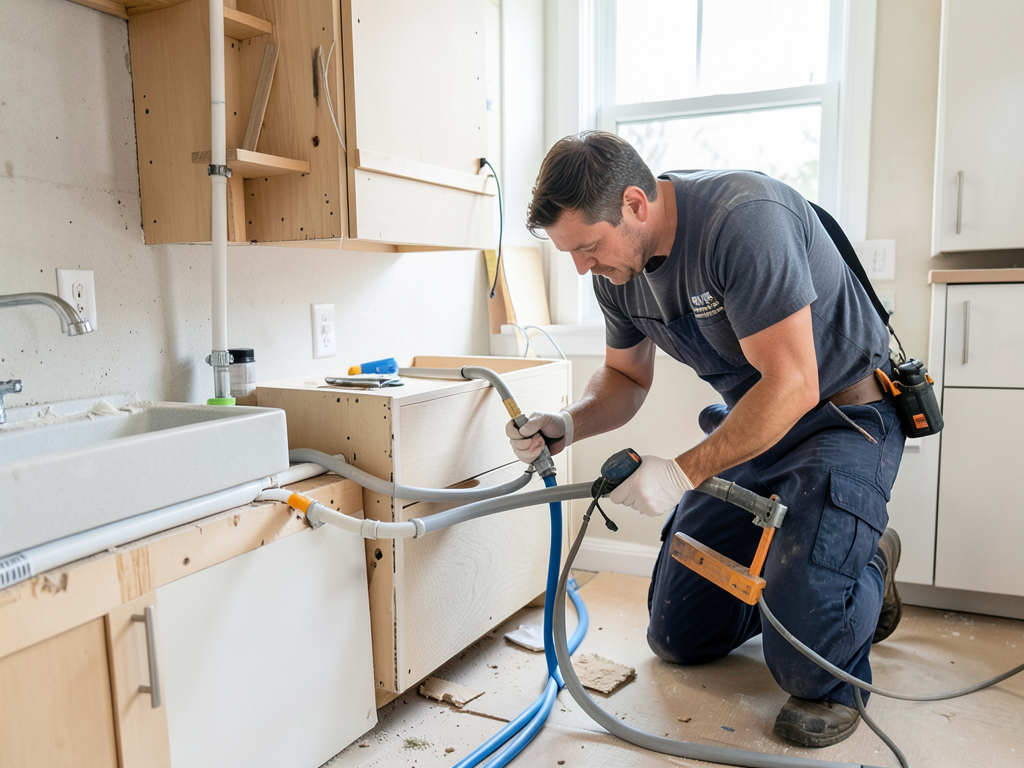
Planning the Plumbing for Your St. Matthews Kitchen Remodel
Planning a kitchen remodel in St. Matthews requires understanding local plumbing codes, water pressure patterns, and the unique challenges of Louisville’s clay-heavy soil. The average St. Matthews home built between 1950 and 1980 often has galvanized steel supply lines that corrode internally, reducing flow to modern fixtures. Before selecting that farmhouse sink or professional range, you need to know if your existing plumbing can handle the load. Louisville Metro Department of Codes & Regulations.
St. Matthews experiences hard water with calcium levels around 180 ppm, which accelerates mineral buildup in pipes and fixtures. This means your new plumbing installation needs proper water treatment integration from the start. A typical kitchen remodel here involves replacing 30 to 50 feet of supply line, installing new P-trap assemblies, and ensuring proper venting for island installations. Why Your Prospect Home Needs a Whole House Water Filtration System.
Understanding St. Matthews Kitchen Plumbing Requirements
St. Matthews falls under Louisville Metro plumbing jurisdiction, which follows the Kentucky State Plumbing Code with local amendments. The code requires a minimum 1.5-inch drain line for kitchen sinks, with 2-inch lines recommended for island installations to prevent clogs from food particles and grease. Kentucky State Plumbing Board licensing information.
Water pressure in St. Matthews typically ranges from 45 to 65 psi, but older neighborhoods near Seneca Park often see pressure drops to 35 psi during peak usage. This affects how many fixtures you can run simultaneously and whether you need a pressure-boosting system for your remodel. The Cost of Tankless Water Heater Installation in Jeffersontown.
The Louisville Water Company’s high-quality water means you don’t need extensive filtration for taste, but the hard mineral content still requires treatment to protect your investment in premium fixtures. A water softener installation during your remodel can extend the life of your new faucets and prevent scale buildup on glass and stainless steel surfaces. Fixing Low Water Pressure in Your Crescent Hill Bungalow.
Kitchen Island Plumbing Challenges
Island sinks present unique venting challenges in St. Matthews homes. Traditional vertical vents aren’t possible when the sink sits in the middle of your kitchen floor plan. You’ll need either an island vent (also called a loop vent) or an air admittance valve (AAV) to prevent slow drainage and gurgling sounds.
The Louisville Metro Code permits AAVs in residential settings, but they must be accessible for maintenance and located within 6 feet of the trap. Many St. Matthews homeowners prefer loop vents because they provide more reliable drainage for heavy-use kitchens, though they require more complex installation through the floor system.. Read more about Reliable Gas Line Installation for Outdoor Kitchens in Norton Commons.
Island plumbing also needs proper drainage slope. The Louisville Metro requirement is 1/4 inch per foot minimum slope toward the main drain. In homes with post-tension slab foundations common in newer St. Matthews developments, this can mean core drilling through concrete to achieve proper drainage paths.
Gas Line Considerations for Professional Ranges
St. Matthews homes built before 1970 often have black iron gas lines that corrode at joints over time. When planning for a professional-grade range installation, you need to assess whether your existing gas service can handle the additional BTU load. A typical 36-inch professional range requires 30,000 to 50,000 BTU, which may necessitate a line upgrade. How to Handle a Main Sewer Line Backup in Your St. Matthews Home.
The Kentucky State Plumbing Code requires gas line installations to be pressure tested at 1.5 times the working pressure for at least 15 minutes without pressure drop. This test proves there are no leaks in the system before connecting your new range. Many St. Matthews homes need flexible gas connectors added during remodels to accommodate the movement of slide-in ranges.
Gas line relocation often involves cutting into walls or floors to access existing lines. In St. Matthews’ older neighborhoods, this can reveal unexpected issues like abandoned fuel oil lines or deteriorated pipe insulation that needs replacement. Always budget for contingencies when moving gas lines during your kitchen remodel.
Permit Requirements and Inspection Process
Louisville Metro requires permits for all kitchen plumbing modifications, including fixture relocations, gas line changes, and new installations. The permit process involves submitting detailed plans showing fixture locations, drain sizes, vent configurations, and gas line routing. Permit fees in Jefferson County typically range from $75 to $250 depending on project scope.. Read more about Fast Faucet and Fixture Upgrades for Your Home in Beechmont.
St. Matthews homeowners should expect two inspections during their remodel: a rough-in inspection after all new lines are installed but before walls are closed, and a final inspection after all fixtures are connected and operational. The rough-in inspection checks for proper slope, venting, and support, while the final inspection verifies code compliance and proper operation.
Permit processing times vary seasonally. During peak remodeling months from March through June, expect 5 to 7 business days for permit approval. Off-season approvals often come within 2 to 3 days. Starting your permit application early prevents delays in your overall project timeline.
Dishwasher and Ice Maker Plumbing Integration
Modern dishwashers require both water supply and drainage connections, plus proper electrical circuits. The Louisville Metro Code requires an air gap fitting on the dishwasher drain to prevent backflow contamination. This air gap must be installed at least 18 inches above the flood level rim of the sink or standpipe. Backflow Prevention & Testing.
Refrigerator ice maker lines in St. Matthews homes often fail due to the area’s hard water causing mineral buildup and eventual leaks. When planning your remodel, consider installing a dedicated 1/4-inch water line with a shutoff valve behind the refrigerator. This makes future maintenance easier and prevents water damage from line failures.
Many St. Matthews homeowners are adding pot fillers above their ranges during remodels. These require a 1/2-inch hot water line with a quarter-turn valve that can handle the weight of a fully extended arm. The valve must be installed on the wall stud for proper support and accessibility.
Historic Home Plumbing Considerations
St. Matthews contains numerous mid-century ranch homes with original galvanized steel plumbing that appears functional but delivers only a fraction of its designed flow capacity. A visual inspection might show intact pipes, but internal corrosion can reduce actual flow to 20% of rated capacity. This becomes critical when planning for multiple modern fixtures.
Older St. Matthews homes near Seneca Gardens often have cast iron drain lines that crack due to soil movement from Louisville’s clay-heavy soil. These cracks allow tree roots to infiltrate the system, causing recurring clogs. During a kitchen remodel, it’s often cost-effective to replace the entire drain line from the kitchen to the main sewer connection.
Lead solder was commonly used in plumbing connections until the late 1980s. If your St. Matthews home predates 1990, testing for lead in your water becomes important when planning for families with young children. The Louisville Water Company provides free lead testing kits, but replacing old solder joints during your remodel eliminates this concern entirely.
Cost Factors and Budgeting
Kitchen plumbing rough-in costs in St. Matthews typically range from $1,500 to $4,000 depending on project complexity. Simple fixture replacements run at the lower end, while comprehensive rough-ins with gas line relocations and island installations reach the higher range. These figures don’t include fixtures, which can add $2,000 to $8,000 to your budget.
Several factors drive plumbing costs higher in St. Matthews remodels. Concrete slab penetration adds $200 to $500 per cut. Working in finished spaces requires dust containment and protection, adding labor hours. Permit fees, inspection costs, and potential code upgrade requirements can increase your total by 15% to 25%.
Hidden costs often surprise St. Matthews homeowners. Discovering deteriorated drain lines during demolition might add $800 to $1,500 for replacement. Upgrading gas service from 1/2-inch to 3/4-inch pipe for a high-BTU range adds $300 to $600. These contingencies should be in your remodel budget.
Material Selection for Louisville’s Climate
PEX piping has become the standard for kitchen supply lines in St. Matthews due to its freeze resistance and flexibility. Unlike rigid copper, PEX can expand slightly if water freezes, preventing burst pipes during Louisville’s occasional cold snaps. PEX also resists the mineral buildup that affects galvanized and copper pipes in hard water areas.
For drain lines, PVC offers the best value in St. Matthews kitchens. It resists corrosion, handles Louisville’s hard water well, and costs significantly less than cast iron. However, cast iron remains preferable for main stacks in multi-story homes because it dampens the sound of water flow between floors.
Water hammer arrestors become essential when installing modern fixtures with quick-closing valves. Louisville’s water pressure fluctuations can cause pipes to bang against framing members without these devices. Install arrestors on both hot and cold lines near each fixture to prevent noise and potential pipe damage.
Project Timeline and Scheduling
A typical kitchen plumbing remodel in St. Matthews takes 2 to 4 days for the rough-in phase, depending on project complexity. Simple fixture replacements might finish in one day, while comprehensive remodels with gas line relocations and island installations require the full four days. The finish phase adds another 1 to 2 days.
Permit processing adds 3 to 7 days before work can begin. Inspection scheduling adds another 1 to 3 days between rough-in and finish phases. Weather rarely affects indoor plumbing work, but supply chain issues can delay special-order fixtures or custom rough-in components.
Most St. Matthews homeowners coordinate plumbing work with other trades to minimize overall project duration. Plumbers typically work first to install supply and drain lines, then HVAC and electrical trades rough in their components, followed by insulation and drywall. The finish plumber returns last to connect fixtures after all other work is complete.
Common Mistakes to Avoid
Underestimating water pressure requirements ranks as the most common mistake in St. Matthews kitchen remodels. Installing a high-flow faucet without assessing your home’s pressure can result in disappointing performance. Always test your existing pressure before selecting fixtures, especially for homes near Seneca Park where pressure issues are most common.
Ignoring local code requirements for air gaps and venting leads to failed inspections and project delays. The Louisville Metro inspector will not approve installations without proper air gaps on dishwasher drains or adequate venting for island sinks. These requirements aren’t optional suggestions but mandatory code compliance items.
Failing to coordinate with other trades causes costly rework. Electrical rough-in must accommodate plumbing locations, and HVAC ducts need to avoid plumbing chases. Schedule a pre-construction meeting with all trades to review plans and prevent conflicts that require expensive modifications during construction.
Energy Efficiency and Water Conservation
Modern kitchen fixtures offer significant water and energy savings compared to older models. Low-flow faucets use 1.5 gallons per minute versus 2.2 gallons for standard models, saving 30% on water usage without sacrificing performance. This matters in St. Matthews where water costs average $4.50 per 1,000 gallons.
Tankless water heaters for kitchen use eliminate the energy waste of keeping hot water ready at all times. For St. Matthews homes where the water heater sits far from the kitchen, point-of-use tankless units provide instant hot water while reducing energy consumption by up to 40% compared to traditional tank heaters.
Smart fixtures with flow monitoring help detect leaks early. These devices can shut off water automatically if they detect unusual flow patterns, preventing the extensive water damage that costs St. Matthews homeowners thousands in insurance claims each year. Many insurance companies offer discounts for homes with leak detection systems.
Choosing the Right Plumbing Contractor
Selecting a plumber for your St. Matthews kitchen remodel requires verifying Kentucky state licensing and Louisville Metro permit authority. A master plumber license ensures the contractor understands local codes and can pull the necessary permits. Ask to see their license number and verify it with the Kentucky State Plumbing Board.
Experience with kitchen-specific work matters more than general plumbing experience. Kitchen remodels involve complex coordination between multiple trades and require understanding of modern fixture installation. A contractor who primarily handles emergency repairs might lack the planning and coordination skills needed for successful kitchen remodels.
References from St. Matthews homeowners provide the best insight into a contractor’s reliability. Ask to see recent kitchen projects and speak with past clients about their experience with scheduling, communication, and problem resolution. A good contractor will have no hesitation providing this information.
Preparing for Your Kitchen Remodel
Before demolition begins, locate and test all shutoff valves in your St. Matthews home. Many older homes have corroded or frozen valves that won’t close properly when needed. Replace any questionable valves before starting work to ensure you can control water flow during the remodel.
Document your existing plumbing configuration with photos and measurements. This helps your plumber understand the current setup and plan the most efficient approach for your remodel. Note the locations of supply lines, drain connections, and any unusual configurations that might affect the new installation.
Plan for temporary kitchen facilities during the remodel. Most St. Matthews kitchen projects require at least 3 to 5 days without full kitchen functionality. Setting up a temporary cooking area with microwave, coffee maker, and disposable dishes helps maintain some normalcy during the renovation process.
Final Inspection and Quality Assurance
The final inspection verifies that all plumbing work meets Louisville Metro standards and functions properly. Your plumber should test all fixtures for leaks, verify proper drainage, and demonstrate that all shutoff valves operate correctly. This inspection typically takes 30 to 60 minutes depending on project complexity.
Quality assurance goes beyond passing inspection. Check that all fixtures operate smoothly, there are no unusual noises in the drain lines, and water pressure meets your expectations. Test the garbage disposal, dishwasher connections, and any specialty fixtures like pot fillers or water dispensers to ensure proper operation.
Request documentation of all work performed, including material specifications, warranty information, and as-built drawings showing new plumbing locations. This documentation proves valuable for future maintenance, home sales, or if you need to make modifications later. Keep these records with your home’s permanent files.
Frequently Asked Questions
How long does a kitchen plumbing remodel take in St. Matthews?
A typical kitchen plumbing remodel in St. Matthews takes 2 to 4 days for rough-in work, plus 1 to 2 days for finish connections. The entire process, including permit processing and inspections, usually spans 2 to 3 weeks from start to completion.
Do I need permits for kitchen plumbing changes in St. Matthews?
Yes, Louisville Metro requires permits for all kitchen plumbing modifications, including fixture relocations, gas line changes, and new installations. Permit fees range from $75 to $250 depending on project scope, and inspections are required at rough-in and final stages.
What causes low water pressure in older St. Matthews homes?
Galvanized steel supply lines in homes built before 1980 often corrode internally, reducing actual flow to 20% of designed capacity. This appears as low water pressure even when main supply pressure is adequate. Replacement with PEX or copper typically restores full flow.
Can I install a pot filler during my kitchen remodel?
Yes, pot fillers require a 1/2-inch hot water line with a quarter-turn valve installed on a wall stud for proper support. The valve must handle the weight of a fully extended arm and provide reliable shutoff when the arm is pushed back against the wall.
How much does kitchen plumbing rough-in cost in St. Matthews?
Kitchen plumbing rough-in costs in St. Matthews typically range from $1,500 to $4,000 depending on project complexity. Simple fixture replacements run at the lower end, while comprehensive remodels with gas line relocations and island installations reach the higher range.
What type of piping is best for St. Matthews kitchens?
PEX piping offers the best combination of freeze resistance, flexibility, and cost-effectiveness for St. Matthews kitchens. It resists Louisville’s hard water mineral buildup better than copper or galvanized steel and can expand slightly to prevent burst pipes during rare cold snaps.
Ready to Start Your Kitchen Remodel?
Planning your kitchen plumbing correctly prevents costly mistakes and ensures your new space functions perfectly for years to come. The unique characteristics of St. Matthews homes require specific expertise in local codes, water pressure patterns, and material selection for our climate.
Don’t let plumbing issues derail your kitchen dreams. Call (502) 370-2677 today to schedule a consultation with our experienced team. We’ll assess your current system, explain your options, and provide a detailed plan that keeps your project on schedule and within budget. Your perfect St. Matthews kitchen is just a phone call away.
Pick up the phone and call (502) 370-2677 before the next storm hits. Our team is ready to help you navigate every aspect of your kitchen plumbing remodel, from initial design through final inspection. Let’s make your kitchen renovation a success.
{
“@context”: “https://schema.org”,
“@type”: “BlogPosting”,
“headline”: “Planning the Plumbing for Your St. Matthews Kitchen Remodel”,
“description”: “Expert guide to kitchen plumbing remodeling in St. Matthews. Learn about permits, rough-ins, gas lines, and local codes for your 2026 renovation project.”,
“wordCount”: 2773,
“datePublished”: “2026-02-28T11:20:00.000Z”,
“dateModified”: “2026-02-28T11:20:00.000Z”,
“inLanguage”: “en-US”,
“mainEntityOfPage”: {
“@type”: “WebPage”,
“@id”: “https://victoryplumbinglouisville.com”
},
“publisher”: {
“@type”: “LocalBusiness”,
“name”: “Victory Plumbing Louisville”,
“url”: “https://victoryplumbinglouisville.com”
},
“author”: {
“@type”: “Organization”,
“name”: “Victory Plumbing Louisville”,
“url”: “https://victoryplumbinglouisville.com”
},
“image”: {
“@type”: “ImageObject”,
“url”: “https://victoryplumbinglouisville.com/wp-content/uploads/2026/03/planning-the-plumbing-for-your-st-matthews-kitchen-1.png”
}
}
{
“@context”: “https://schema.org”,
“@type”: “Plumber”,
“name”: “Victory Plumbing Louisville”,
“url”: “https://victoryplumbinglouisville.com”,
“address”: {
“@type”: “PostalAddress”,
“addressLocality”: “Louisville”
},
“areaServed”: {
“@type”: “City”,
“name”: “Louisville”
}
}
{
“@context”: “https://schema.org”,
“@type”: “FAQPage”,
“mainEntity”: [
{
“@type”: “Question”,
“name”: “How long does a kitchen plumbing remodel take in St. Matthews?”,
“acceptedAnswer”: {
“@type”: “Answer”,
“text”: “A typical kitchen plumbing remodel in St. Matthews takes 2 to 4 days for rough-in work, plus 1 to 2 days for finish connections. The entire process, including permit processing and inspections, usually spans 2 to 3 weeks from start to completion.”
}
},
{
“@type”: “Question”,
“name”: “Do I need permits for kitchen plumbing changes in St. Matthews?”,
“acceptedAnswer”: {
“@type”: “Answer”,
“text”: “Yes, Louisville Metro requires permits for all kitchen plumbing modifications, including fixture relocations, gas line changes, and new installations. Permit fees range from $75 to $250 depending on project scope, and inspections are required at rough-in and final stages.”
}
},
{
“@type”: “Question”,
“name”: “What causes low water pressure in older St. Matthews homes?”,
“acceptedAnswer”: {
“@type”: “Answer”,
“text”: “Galvanized steel supply lines in homes built before 1980 often corrode internally, reducing actual flow to 20% of designed capacity. This appears as low water pressure even when main supply pressure is adequate. Replacement with PEX or copper typically restores full flow.”
}
},
{
“@type”: “Question”,
“name”: “Can I install a pot filler during my kitchen remodel?”,
“acceptedAnswer”: {
“@type”: “Answer”,
“text”: “Yes, pot fillers require a 1/2-inch hot water line with a quarter-turn valve installed on a wall stud for proper support. The valve must handle the weight of a fully extended arm and provide reliable shutoff when the arm is pushed back against the wall.”
}
},
{
“@type”: “Question”,
“name”: “How much does kitchen plumbing rough-in cost in St. Matthews?”,
“acceptedAnswer”: {
“@type”: “Answer”,
“text”: “Kitchen plumbing rough-in costs in St. Matthews typically range from $1,500 to $4,000 depending on project complexity. Simple fixture replacements run at the lower end, while comprehensive remodels with gas line relocations and island installations reach the higher range.”
}
},
{
“@type”: “Question”,
“name”: “What type of piping is best for St. Matthews kitchens?”,
“acceptedAnswer”: {
“@type”: “Answer”,
“text”: “PEX piping offers the best combination of freeze resistance, flexibility, and cost-effectiveness for St. Matthews kitchens. It resists Louisville’s hard water mineral buildup better than copper or galvanized steel and can expand slightly to prevent burst pipes during rare cold snaps.”
}
},
{
“@type”: “Question”,
“name”: “Ready to Start Your Kitchen Remodel?”,
“acceptedAnswer”: {
“@type”: “Answer”,
“text”: “Planning your kitchen plumbing correctly prevents costly mistakes and ensures your new space functions perfectly for years to come. The unique characteristics of St. Matthews homes require specific expertise in local codes, water pressure patterns, and material selection for our climate.”
}
}
]
}
{
“@context”: “https://schema.org”,
“@type”: “BreadcrumbList”,
“itemListElement”: [
{
“@type”: “ListItem”,
“position”: 1,
“name”: “Home”,
“item”: “https://victoryplumbinglouisville.com”
},
{
“@type”: “ListItem”,
“position”: 2,
“name”: “Blog”,
“item”: “https://victoryplumbinglouisville.com/blog”
},
{
“@type”: “ListItem”,
“position”: 3,
“name”: “Planning the Plumbing for Your St. Matthews Kitchen Remodel”
}
]
}
{
“@context”: “https://schema.org”,
“@type”: “Service”,
“serviceType”: “Plumbing”,
“provider”: {
“@type”: “LocalBusiness”,
“name”: “Victory Plumbing Louisville”,
“url”: “https://victoryplumbinglouisville.com”
},
“areaServed”: {
“@type”: “City”,
“name”: “Louisville”
},
“description”: “Expert guide to kitchen plumbing remodeling in St. Matthews. Learn about permits, rough-ins, gas lines, and local codes for your 2026 renovation project.”
}