
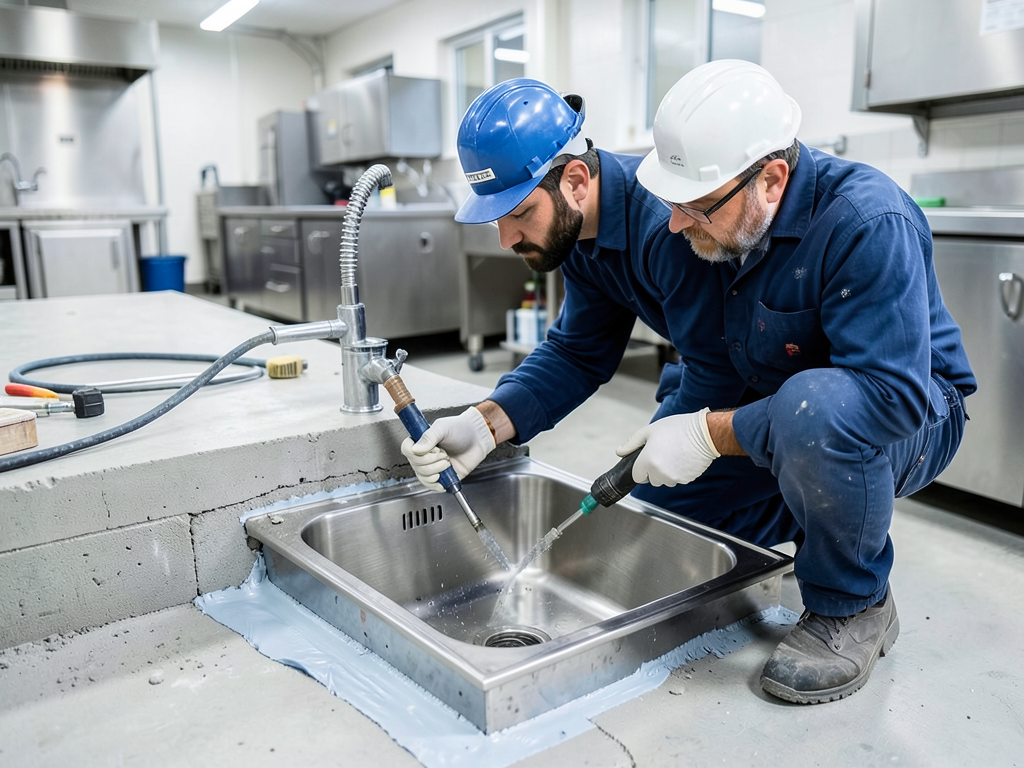
Why Your Louisville Restaurant Kitchen Needs Properly Installed Floor Sinks and Indirect Wastes
Restaurant kitchens in Louisville face unique plumbing challenges that go far beyond standard residential drainage. When health inspectors walk through your commercial kitchen, they’re looking for one critical component that many new restaurant owners overlook: properly installed floor sinks with indirect waste systems. These specialized drainage fixtures prevent contamination, comply with Kentucky plumbing codes, and protect your business from costly violations. Louisville Metropolitan Sewer District.
Floor sinks serve as collection points for indirect waste lines from equipment like ice machines, steam kettles, and beverage dispensers. Unlike direct connections to the sanitary sewer, indirect waste systems use air gaps to prevent backflow contamination. This design protects your potable water supply and meets the strict requirements of both the Kentucky State Plumbing Code and Louisville MSD regulations. Kentucky State Plumbing Code.
The consequences of improper installation extend beyond failed inspections. Without adequate floor sinks, wastewater can pool on kitchen floors, creating slip hazards and breeding grounds for bacteria. During Louisville’s humid summers, these conditions accelerate mold growth and compromise food safety. A properly designed indirect waste system channels water away efficiently while maintaining the critical air gap that separates clean and contaminated water streams. The Cost of Tankless Water Heater Installation in Jeffersontown.
Commercial kitchens in the NuLu district, downtown Louisville, and St. Matthews all face similar drainage challenges. The age of your building, the type of cuisine you serve, and your kitchen layout all influence the specific floor sink requirements for your establishment. Understanding these factors helps you make informed decisions about your kitchen’s plumbing infrastructure. 24/7 Emergency Plumbing Services.
Understanding Indirect Waste Systems for Louisville Commercial Kitchens
Indirect waste systems operate on a simple principle: never allow contaminated water to have a direct path to your sanitary sewer system. Instead, waste flows through an air gap before entering the drainage network. This physical separation prevents backflow scenarios where contaminated water could siphon back into clean water lines. How to Handle a Main Sewer Line Backup in Your St. Matthews Home.
The Kentucky State Plumbing Code mandates specific air gap dimensions based on the type of fixture being drained. For example, an ice machine requires a minimum two-inch air gap, while a steam table might need three inches. These measurements aren’t arbitrary—they’re based on hydraulic principles that ensure proper drainage while maintaining the protective barrier against contamination.
Louisville’s water pressure fluctuations, particularly during summer months when demand peaks, make these air gaps even more critical. Without them, negative pressure in the water supply could create a vacuum effect, drawing contaminated water back into your clean water lines. This scenario, known as backflow, represents a serious health hazard that health inspectors actively look for during routine inspections. Fixing Low Water Pressure in Your Crescent Hill Bungalow.
Indirect waste systems also include specialized components like P-traps and trap primers. The P-trap creates a water seal that blocks sewer gases from entering your kitchen, while trap primers automatically maintain this water seal, preventing it from drying out during periods of non-use. In Louisville’s climate, where temperature fluctuations can cause pipes to contract and expand, these components work together to maintain system integrity year-round.
Louisville MSD Requirements for Commercial Kitchen Drainage
The Louisville Metropolitan Sewer District enforces specific regulations for commercial kitchen drainage that go beyond state plumbing codes. MSD requires all food service establishments to install grease interceptors for any fixture that may carry fats, oils, or grease (FOG). These interceptors prevent FOG from entering the sewer system where it can solidify and cause blockages.
MSD mandates regular cleaning and maintenance of grease interceptors based on your kitchen’s size and volume. Restaurants in high-traffic areas like Bardstown Road or Frankfort Avenue often require more frequent cleaning schedules due to higher FOG volumes. Failure to maintain these systems can result in fines and mandatory upgrades, costing thousands in emergency repairs.
The district also requires specific materials for indirect waste piping. Copper, cast iron, and certain types of plastic piping are approved, while others may not meet MSD standards. The choice of material affects not only compliance but also the system’s longevity and resistance to corrosion from acidic food waste and cleaning chemicals common in commercial kitchens.
MSD’s pretreatment program includes inspection requirements for new installations and major renovations. Before opening your restaurant, you must schedule an inspection with MSD to verify that your indirect waste system meets all current standards. This process can take several weeks, so planning ahead is essential for meeting your opening timeline.
Floor Sink Materials and Sizing for Louisville Restaurants
Commercial floor sinks come in two primary materials: stainless steel and porcelain-coated cast iron. Stainless steel offers superior corrosion resistance and is easier to clean, making it ideal for kitchens that handle acidic foods or use harsh cleaning chemicals. Cast iron with porcelain enamel provides excellent durability and chemical resistance at a lower cost, though it can chip if heavy equipment is dropped on it.
The size of your floor sink depends on your kitchen’s square footage and the number of fixtures it serves. A small cafe in the Highlands might need a 12-inch by 12-inch floor sink, while a large restaurant in downtown Louisville could require a 24-inch by 24-inch model or larger. Undersizing leads to overflow and potential health code violations, while oversizing wastes valuable kitchen space.
Floor sink depth also matters significantly. Deep sump floor sinks (typically 6-8 inches deep) handle higher volumes of water and are better suited for busy kitchens or those with multiple indirect waste connections. Shallow floor sinks (3-4 inches deep) work well for smaller operations but may overflow during peak usage periods.
The grate or dome strainer covering your floor sink must be removable for cleaning and meet specific load-bearing requirements. In Louisville restaurants, where kitchen staff frequently move heavy equipment, grates must support at least 300 pounds of static load. The openings in the grate must be small enough to prevent utensils and other debris from entering the drainage system while still allowing water to flow freely.
Professional Installation Process for Commercial Floor Sinks
Installing a commercial floor sink requires expertise in concrete cutting, waterproofing, and proper drainage slope calculations. The process begins with assessing your kitchen’s existing plumbing layout and determining the optimal location for the floor sink. This location must be accessible for cleaning while minimizing interference with kitchen workflow.
Concrete cutting represents one of the most critical steps in floor sink installation. The plumber must cut through the concrete slab to create a properly sized opening, typically 4-6 inches larger than the floor sink itself. This extra space allows for proper bedding material and waterproofing membrane installation. In Louisville’s older buildings, especially those in historic districts, concrete cutting requires extra care to avoid damaging existing utilities.
Waterproofing is essential for preventing moisture damage to your building’s structure. A waterproofing membrane extends at least 6 inches beyond the floor sink on all sides, creating a barrier that directs any seepage toward the drain rather than allowing it to penetrate the concrete. This membrane must be compatible with both the flooring material and the cleaning chemicals used in your kitchen.
The final testing phase ensures your floor sink and indirect waste system function correctly. Plumbers test for proper drainage slope (minimum 1/4 inch per foot), check all connections for leaks, and verify that air gaps meet code requirements. They also test trap primers to ensure they maintain proper water seals. This testing phase prevents costly callbacks and ensures your system will perform reliably during your restaurant’s busiest periods.
Common Floor Sink Problems and Maintenance in Louisville Kitchens
Floor sink problems often develop gradually, making regular maintenance essential for preventing major issues. One common problem is trap seal evaporation, which occurs when floor sinks sit unused for extended periods. In Louisville restaurants that close for holidays or experience seasonal business fluctuations, this issue is particularly common. Without water in the trap, sewer gases can enter the kitchen, creating unpleasant odors and potential health hazards.
Debris accumulation in floor sink grates and strainers reduces drainage efficiency and can lead to overflow during peak usage. Food particles, straws, and small utensils frequently find their way into floor sinks despite best efforts to prevent it. Regular cleaning of these components prevents blockages and maintains proper drainage flow rates.
Corrosion of floor sink components, particularly in older Louisville buildings, can compromise system integrity. Acidic foods, cleaning chemicals, and Louisville’s water chemistry all contribute to corrosion over time. Stainless steel floor sinks resist corrosion better than other materials, but even they can develop problems in harsh chemical environments.
Freeze damage represents a unique concern for Louisville restaurants, particularly those in older buildings with marginal insulation. When water freezes in drain lines or traps, it expands and can crack pipes or damage floor sink components. Proper insulation and heat tracing of vulnerable pipes prevents this costly damage during Louisville’s occasional cold snaps.
Cost Factors for Floor Sink Installation in Louisville Restaurants
Floor sink installation costs vary significantly based on several factors specific to Louisville commercial kitchens. The age and construction type of your building greatly influences installation complexity. Installing a floor sink in a new construction restaurant in East End Louisville differs substantially from retrofitting one in a historic building in Old Louisville, where existing plumbing may require extensive modifications.
The number of indirect waste connections affects both material costs and installation time. A small cafe with one ice machine requires a simpler system than a full-service restaurant with multiple beverage stations, steam tables, and specialized cooking equipment. Each additional connection requires proper sizing of the floor sink and potentially larger drainage lines.
Floor sink material choice impacts both upfront costs and long-term maintenance expenses. While stainless steel floor sinks cost more initially, their superior durability and ease of cleaning often result in lower lifetime costs for busy Louisville restaurants. Cast iron options provide good value for smaller operations with lower usage volumes.
Permit and inspection fees add to the total project cost. Louisville MSD charges fees based on the scope of work, and additional fees may apply for after-hours inspections needed to meet tight restaurant opening schedules. These fees, while necessary for compliance, can add several hundred dollars to your project budget.
Why Professional Installation Matters for Louisville Food Service
Professional installation ensures your floor sink system meets all Louisville and Kentucky code requirements while functioning reliably under real-world conditions. Experienced commercial plumbers understand the specific challenges Louisville restaurants face, from the city’s water pressure variations to the unique demands of different cuisine types.
DIY or handyman installations often fail to address critical code requirements, leading to failed inspections and costly rework. Professional plumbers bring not only technical expertise but also familiarity with local inspectors’ expectations and common failure points in restaurant plumbing systems. This knowledge helps prevent the delays and expenses associated with failed inspections.
Professional installation includes proper documentation for your records. This documentation proves your system meets code requirements and can be invaluable during health inspections or if you decide to sell your restaurant. Many Louisville restaurant owners have discovered that proper documentation of plumbing improvements adds value to their business.
Emergency response capability represents another advantage of working with professional commercial plumbers. When a floor sink backs up during your busiest dinner service or a trap primer fails on a holiday weekend, having a relationship with a reliable plumbing company ensures rapid response to minimize business disruption.
Comparing Floor Sink Options for Louisville Commercial Kitchens
| Floor Sink Type | Best For | Cost Range | Maintenance Level |
|---|---|---|---|
| Stainless Steel | High-volume restaurants | $800-$1,500 | Low |
| Porcelain Cast Iron | Small cafes, bakeries | $400-$800 | Medium |
| Deep Sump | Kitchens with multiple fixtures | $600-$1,200 | Low |
| Shallow Sump | Single fixture applications | $300-$600 | High |
This comparison shows that while initial costs vary, the total cost of ownership depends heavily on your specific kitchen needs and maintenance capabilities. Why Your Prospect Home Needs a Whole House Water Filtration System.
Ensuring Long-Term Success with Your Floor Sink System
Success with your floor sink system starts with proper planning during the design phase of your restaurant. Consider not just current needs but also potential future expansion. A floor sink system that barely meets your needs today may become inadequate as your business grows, requiring costly retrofits later.
Regular maintenance schedules prevent most common floor sink problems. Establish a cleaning routine that includes daily debris removal from grates, weekly deep cleaning of the floor sink basin, and monthly inspection of all indirect waste connections. Document these activities to demonstrate your commitment to food safety during health inspections.
Train your kitchen staff on proper floor sink usage and maintenance. Simple practices like scraping plates before washing and keeping grates clear of debris significantly extend the life of your system. Staff training also includes recognizing early warning signs of problems, such as slow drainage or unusual odors, allowing for prompt professional intervention.
Consider your restaurant’s specific cuisine when planning your floor sink system. A sushi restaurant generates different waste streams than a pizza kitchen or a coffee shop. Understanding these differences helps you select the right floor sink size, material, and configuration for your specific needs.
Frequently Asked Questions
How often should floor sinks be cleaned in a commercial kitchen?
Floor sinks should be cleaned daily to remove debris and prevent odors. A deep cleaning should be performed weekly, including scrubbing the basin and checking all connections. Monthly inspections should verify that trap primers are functioning correctly and that there are no signs of corrosion or damage.
What are the consequences of failing a health inspection due to improper floor sink installation?
Failing a health inspection due to floor sink issues can result in immediate closure orders, fines ranging from hundreds to thousands of dollars, and mandatory corrective actions. Repeat violations may lead to increased scrutiny from health inspectors and potential loss of operating permits. The damage to your restaurant’s reputation can also affect customer trust and business revenue.
Can I install a floor sink myself to save money?
While technically possible, DIY floor sink installation is not recommended for commercial kitchens. Professional installation ensures compliance with Louisville and Kentucky plumbing codes, proper sizing and placement for your specific needs, and documentation for health inspections. The cost of professional installation is typically much less than the expenses associated with failed inspections, code violations, or system failures that often result from improper DIY installations.
Protect Your Louisville Restaurant with Expert Floor Sink Installation
Properly installed floor sinks and indirect waste systems represent a critical investment in your restaurant’s success and compliance. These systems prevent health hazards, ensure smooth kitchen operations, and protect your business from costly violations and closures. Whether you’re opening a new restaurant in the Highlands, renovating a historic building in downtown Louisville, or upgrading your existing kitchen, professional installation makes the difference between a system that works reliably for years and one that causes ongoing problems.
Don’t wait until a health inspection reveals problems with your floor sink system. Contact our experienced commercial plumbing team today to schedule a consultation. We’ll assess your kitchen’s specific needs, explain your options, and provide a detailed plan for ensuring your floor sink system meets all Louisville and Kentucky requirements.
Call (502) 370-2677 now to schedule your inspection and protect your restaurant’s future. Our team is ready to help you navigate the complexities of commercial kitchen plumbing and ensure your business operates smoothly and safely.
Every day you wait to address floor sink issues is another day your restaurant operates with unnecessary risk. Make the call that protects your investment and ensures your kitchen meets the highest standards of safety and compliance.
Pick up the phone and call (502) 370-2677 before the next health inspection finds problems that could close your doors. Your restaurant’s success depends on getting the details right, and professional floor sink installation is one detail you can’t afford to overlook.
{
“@context”: “https://schema.org”,
“@type”: “BlogPosting”,
“headline”: “Why Your Louisville Restaurant Kitchen Needs Properly Installed Floor Sinks and Indirect Wastes”,
“description”: “Ensure code compliance and prevent health hazards with expert floor sink installation for Louisville restaurants. Learn about indirect waste systems, MSD requirements, and proper drainage.”,
“wordCount”: 2652,
“datePublished”: “2026-06-12T08:00:00.000Z”,
“dateModified”: “2026-06-12T08:00:00.000Z”,
“inLanguage”: “en-US”,
“mainEntityOfPage”: {
“@type”: “WebPage”,
“@id”: “https://victoryplumbinglouisville.com”
},
“publisher”: {
“@type”: “LocalBusiness”,
“name”: “Victory Plumbing Louisville”,
“url”: “https://victoryplumbinglouisville.com”
},
“author”: {
“@type”: “Organization”,
“name”: “Victory Plumbing Louisville”,
“url”: “https://victoryplumbinglouisville.com”
},
“image”: {
“@type”: “ImageObject”,
“url”: “https://victoryplumbinglouisville.com/wp-content/uploads/2026/03/why-your-louisville-restaurant-kitchen-needs-prope-1.png”
}
}
{
“@context”: “https://schema.org”,
“@type”: “Plumber”,
“name”: “Victory Plumbing Louisville”,
“url”: “https://victoryplumbinglouisville.com”,
“address”: {
“@type”: “PostalAddress”,
“addressLocality”: “Louisville”
},
“areaServed”: {
“@type”: “City”,
“name”: “Louisville”
}
}
{
“@context”: “https://schema.org”,
“@type”: “FAQPage”,
“mainEntity”: [
{
“@type”: “Question”,
“name”: “How often should floor sinks be cleaned in a commercial kitchen?”,
“acceptedAnswer”: {
“@type”: “Answer”,
“text”: “Floor sinks should be cleaned daily to remove debris and prevent odors. A deep cleaning should be performed weekly, including scrubbing the basin and checking all connections. Monthly inspections should verify that trap primers are functioning correctly and that there are no signs of corrosion or damage.”
}
},
{
“@type”: “Question”,
“name”: “What are the consequences of failing a health inspection due to improper floor sink installation?”,
“acceptedAnswer”: {
“@type”: “Answer”,
“text”: “Failing a health inspection due to floor sink issues can result in immediate closure orders, fines ranging from hundreds to thousands of dollars, and mandatory corrective actions. Repeat violations may lead to increased scrutiny from health inspectors and potential loss of operating permits. The damage to your restaurant’s reputation can also affect customer trust and business revenue.”
}
},
{
“@type”: “Question”,
“name”: “Can I install a floor sink myself to save money?”,
“acceptedAnswer”: {
“@type”: “Answer”,
“text”: “While technically possible, DIY floor sink installation is not recommended for commercial kitchens. Professional installation ensures compliance with Louisville and Kentucky plumbing codes, proper sizing and placement for your specific needs, and documentation for health inspections. The cost of professional installation is typically much less than the expenses associated with failed inspections, code violations, or system failures that often result from improper DIY installations.”
}
}
]
}
{
“@context”: “https://schema.org”,
“@type”: “BreadcrumbList”,
“itemListElement”: [
{
“@type”: “ListItem”,
“position”: 1,
“name”: “Home”,
“item”: “https://victoryplumbinglouisville.com”
},
{
“@type”: “ListItem”,
“position”: 2,
“name”: “Blog”,
“item”: “https://victoryplumbinglouisville.com/blog”
},
{
“@type”: “ListItem”,
“position”: 3,
“name”: “Why Your Louisville Restaurant Kitchen Needs Properly Installed Floor Sinks and Indirect Wastes”
}
]
}
{
“@context”: “https://schema.org”,
“@type”: “Service”,
“serviceType”: “Plumbing”,
“provider”: {
“@type”: “LocalBusiness”,
“name”: “Victory Plumbing Louisville”,
“url”: “https://victoryplumbinglouisville.com”
},
“areaServed”: {
“@type”: “City”,
“name”: “Louisville”
},
“description”: “Ensure code compliance and prevent health hazards with expert floor sink installation for Louisville restaurants. Learn about indirect waste systems, MSD requirements, and proper drainage.”
}